Road trip between the Andes, the steppe and the end of the continent
Motorhome hire in Patagonia
Glaciers, steppe, lakes and fjords, departing from Punta Arenas, Puerto Natales, Coyhaique, El Calafate, Ushuaia, Bariloche and Puerto Madryn
countries
2
departure cities
12
rental partners
7
branches
29
pick-up cities in Chile and Argentina
12
as the crow flies between Bariloche and Ushuaia
1,536 km
Twelve pick-up cities, from Bariloche to Ushuaia
Seven rental companies, including Ruta Sur and Andes Campers
Six rental companies in Punta Arenas
Two countries: Chile and Argentina
Carretera Austral, Torres del Paine, Perito Moreno
Punta Arenas is 250 km from Ushuaia as the crow flies
Southern summer from December to February
Written permission from the rental company to cross the border
Find a vehicle
Compare 7 rental companies in Patagonia
No card fees
Pay in instalments at no extra cost
100% secure payment
Covid guarantee included
GDPR protection
Patagonia is shared between Chile and Argentina, from the Lake District to Tierra del Fuego. You drive between glaciers, southern forests, wind-battered steppe and cliffs where penguins nest. Twelve pick-up cities are available: Punta Arenas, Puerto Natales, Coyhaique, Balmaceda, Ushuaia, El Calafate, Río Gallegos, Río Grande, Bariloche, San Martín de los Andes, Trelew and Puerto Madryn. Seven rental companies are present, including Ruta Sur, Andes Campers, Holiday Rent RV, Camper Travel and Motor Home Time.
Here, the scale is not European. Legs are counted in hundreds of kilometres, petrol stations are far apart, and part of the road network is gravel. The wind is a permanent companion. In return, campsites are often deserted, the scenery changes with every pass, and a motorhome gives you the freedom to stop wherever the view is best.
1Carretera Austral, from Coyhaique to the southern lakes
10 to 14 days
about 1,200 km
Coyhaique
Puerto Río Tranquilo
Cochrane
Villa O'Higgins
Coyhaique
From Coyhaique, Ruta 7 plunges into the rainforest: Lake General Carrera, marble chapels, the hanging glaciers of Puerto Río Tranquilo, then the fishing villages of Cochrane and Villa O'Higgins. The road is mostly gravel, with long narrow stretches and ferries to take for the last kilometres.
Plan for fuel at every village and do not count on mobile coverage. Balmaceda, further east near the border, suits a shorter trip, returning to Coyhaique. A one-way trip between two cities depends on the rental companies and dates.
Distance
about 1,200 km
Recommended vehicle
4x4 camper or compact motorhome
2Torres del Paine and the Strait of Magellan
5 to 7 days
about 600 km
Punta Arenas
Puerto Natales
Torres del Paine National Park
Cerro Castillo
Puerto Natales
Punta Arenas
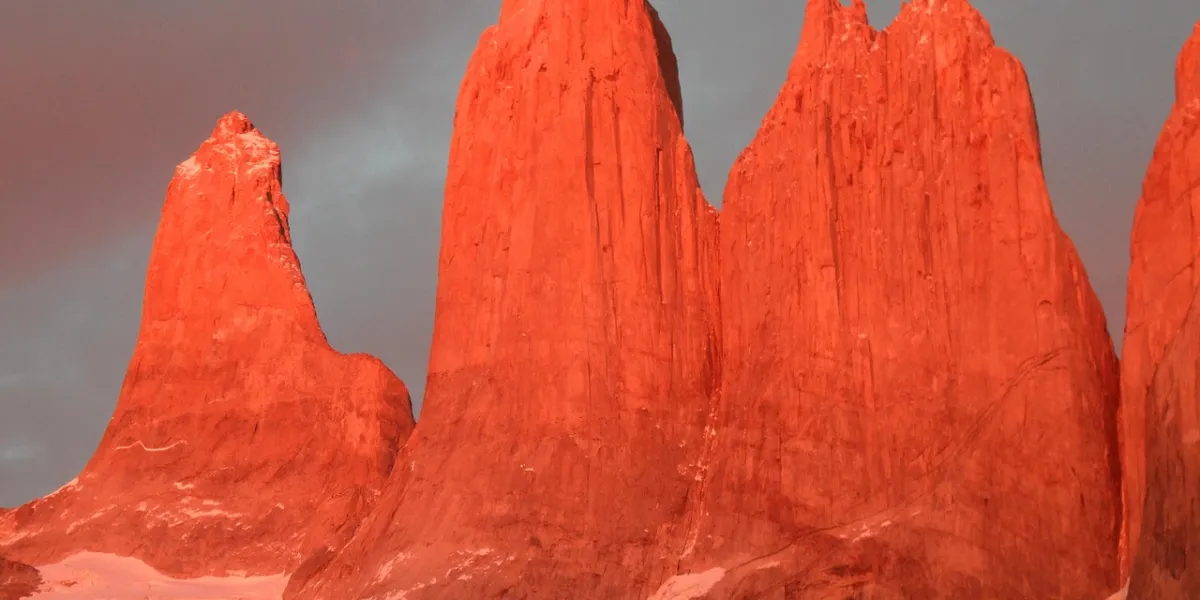
From Punta Arenas, follow the strait to Puerto Natales, the base for Torres del Paine National Park. Inside, a gravel road links the lakes, waterfalls and viewpoints over the granite towers. Guanacos cross without warning, and gusts can push a high-sided vehicle onto the verge.
In high season, the park's pitches are booked long before departure. On the way back, take time to visit the Milodon Cave, near Puerto Natales, before returning to Punta Arenas.
Distance
about 600 km
Recommended vehicle
Compact motorhome or campervan
3El Calafate, Perito Moreno and El Chaltén
4 to 6 days
about 700 km
El Calafate
Perito Moreno Glacier
El Calafate
El Chaltén
El Calafate
On the Argentine side, start from El Calafate. The Perito Moreno Glacier lies in Los Glaciares National Park, about an hour from the town. Further north, the road to El Chaltén crosses the steppe, with the Fitz Roy massif as a backdrop.
Distances are long between petrol stations, and crosswinds are strong on this stretch. To then link up with Chile and Torres del Paine, written permission from the rental company is essential. Find out about customs formalities before booking.
Distance
about 700 km
Recommended vehicle
Motorhome or campervan
4Tierra del Fuego, from Ushuaia to Río Grande
3 to 5 days
about 450 km
Ushuaia
Tierra del Fuego National Park
Lake Fagnano
Río Grande
Ushuaia lies at the foot of the mountains, facing the Beagle Channel. Tierra del Fuego National Park is very close, and Ruta 3 ends on the shore of Lapataia Bay. Heading north, you pass the Garibaldi Pass, Lake Fagnano, then the steppe to Río Grande, on the Atlantic.
The road is paved for most of the trip, but wind and black ice can catch you out. On the ground, distances are more reasonable than elsewhere in Patagonia. A one-way trip between Ushuaia and Río Grande depends on the rental companies.
Distance
about 450 km
Recommended vehicle
Motorhome or campervan
5Northern lakes and the Seven Lakes Road
4 to 6 days
about 450 km
Bariloche
Villa La Angostura
San Martín de los Andes
Bariloche
From Bariloche, the Circuito Chico road runs along Lake Nahuel Huapi, with its pebble beaches and cypress forests. Heading north, the Seven Lakes Road reaches San Martín de los Andes through lakes lined with lenga trees. Ripio is rare, which makes this area easier for a first trip.
Allow for snow in winter, and for summer weekend crowds. The return to Bariloche is possible by the same road, or by a variant via Villa La Angostura.
Distance
about 450 km
Recommended vehicle
Campervan or motorhome
Weather and seasons
When to go in Patagonia?
Best time
High southern summer, from December to February
December to February
highs of 13 to 22 °C, lows of 7 to 9 °C
This is the best time to drive. In Balmaceda, January shows a high of 22 °C, with only 16 mm of rain and up to 13.5 hours of sunshine a day. In Punta Arenas, it is cooler, with 13 °C in January and nearly 18 days of rain. Days are very long, which leaves room for the distances.
High season
January and February, at the peak of departures
January to February
highs of 16 to 17 °C, lows of 10 °C
Argentine and Chilean school holidays fill the parks and campsites. In El Calafate, January brings a high of 16.5 °C and 13.7 hours of sunshine. Book the vehicle, the Torres del Paine pitches and the Carretera Austral ferries well in advance. Main roads are busier, but the tracks stay quiet.
March and April, autumn light
March to April
highs of 12 to 16 °C, lows of 4 to 6 °C in Coyhaique
The late season offers russet forests and fewer people, but the rain returns. In Coyhaique, March brings 128 mm of rain and a high of 16 °C. April drops to 12.5 °C. Some campsites and services close, especially on the Carretera Austral. Ask the rental company about reopening and end-of-season dates.
Winter
Southern winter, from June to August
June to August
highs of 2 to 5 °C, lows of -3 to 0 °C
Winter is cold, short on light and often snowy. In Ushuaia, July shows a high of 2.6 °C and a low of -2.7 °C, with 3.5 hours of sunshine a day. In Puerto Natales, lows fall to -3.4 °C. Many gravel roads become difficult. Only certain areas, such as around Bariloche, remain suitable with an equipped vehicle.
Step by step
Renting in Patagonia, step by step
1
Choose an area and a country
First decide on the area: northern lakes, Carretera Austral, Torres del Paine, Tierra del Fuego or the Atlantic coast. A single country simplifies the trip, as it avoids border-crossing formalities.
2
Choose your pick-up city
Punta Arenas has six rental companies, Bariloche has three. Compare offers for your dates in the search, then choose the city best placed for your route.
3
Plan flights and arrival
Distances make domestic flights common. Arrive a day before picking up the vehicle, to collect your luggage and do the shopping. Remember the seasonal offset: you are travelling in the southern summer.
4
Book parks and crossings
Fix pitches in the parks and the Carretera Austral ferries in advance. If you cross the border, ask the rental company for written permission when you book.
5
Return the vehicle
Allow a one-day margin before your return flight, for wind, gravel and delays. If the start and the end are in two different cities, check that the rental company accepts this one-way trip.
Practical tips
Everything to know before hitting the road
Crossing the border: permission and formalities
To go from Chile to Argentina, or the reverse, the rental company must provide written permission to cross. Without this document, customs may refuse entry. Customs formalities and the insurance required vary: find out before booking, and allow time at the border post.
Ripio: driving on gravel
Ripio means gravel tracks. They are common on the Carretera Austral and in the parks. Drive slowly, keep your distance from other vehicles because of flying stones, and check the terms of your contract. Some rental companies restrict or ban certain tracks.
The wind sets the pace
Gusts on the steppe are strong enough to push a vehicle sideways. Park facing the wind, open doors with care and avoid putting out the awning. On bridges and ridges, slow down, especially in a tall motorhome.
Fuel and distances
Petrol stations are rare outside towns, notably between El Calafate and El Chaltén or on the Carretera Austral. As soon as the gauge drops to half, fill the tank, and keep a reserve of water and food. Mobile coverage disappears in many areas.
Overnight stops and campsites
In national parks, camping is on designated pitches, sometimes to be booked. Elsewhere, overnight parking depends on the municipalities and landowners: check locally. Respect fire rules, take your rubbish with you and leave nothing out in the open.
What travellers ask
Your questions about a road trip in Patagonia
How many days should I allow in Patagonia?
Allow at least two weeks for one area: Carretera Austral, Torres del Paine with El Calafate, or the northern lakes. Distances are long and gravel slows you down. To link several areas, three weeks is more realistic.
Which pick-up city should I choose?
It depends on the area. Punta Arenas and Puerto Natales for Torres del Paine, Coyhaique for the Carretera Austral, El Calafate for the glaciers, Ushuaia for Tierra del Fuego, Bariloche for the lakes.
Which road is the most beautiful?
The Carretera Austral is the most spectacular, but also the slowest and most remote. The Seven Lakes Road, around San Martín de los Andes, is simpler and very scenic.
Can I go in winter?
It is possible in the North, around Bariloche, with a suitable vehicle. Further south, the cold, snow and short daylight greatly reduce the appeal of the trip.
Will I see wildlife?
Yes: guanacos, condors, foxes, rheas, Magellanic penguins and whales depending on the season. Near Puerto Madryn, the Valdés Peninsula is known for its marine mammals. Keep your distance.
Verified customer reviews
They travelled in Patagonia with CoolDrive Nomad
4.3
818 reviews
Communication has been good with prompt replies to any queries we have had.
P.
Chile · Dec 2024
Trustpilot
They have always responded quickly to all my requests and their website is very functional!
Can I cross from Chile to Argentina with the vehicle?
Yes, but only with the rental company's written permission, to be requested before departure. Customs formalities vary by post and period. Check with the rental company and the authorities, and allow time at the border.
Can I return the vehicle in another city?
Often, but it depends on the rental company and dates. A one-way trip between Chile and Argentina is more complicated than a one-way trip within one country. Check the conditions when booking.
What licence do I need to drive in Patagonia?
A valid driving licence is required. For a non-Spanish licence, an international permit is often recommended. Check the conditions with the rental company and the authorities of each country.
Are gravel tracks allowed?
It depends on the contract. Some rental companies allow ripio on specific roads, others ban it for certain vehicles. Read the conditions before booking, especially for the parks and the Carretera Austral.
Where can I find fuel?
In towns and main villages. Between two localities, distances can exceed 200 km without a station. Fill up at every opportunity and keep a margin, especially on the Carretera Austral and on the steppe.
Does mobile coverage reach the region?
Not everywhere. Towns are covered, but many stretches of road and park have no signal at all. Download offline maps and tell someone close to you your route.
About us
Why take a motorhome to Patagonia
Patagonia is a region where you drive to see entire landscapes without meeting anyone. A motorhome, campervan or 4x4 lets you string together glaciers, lakes, steppe and the end of the world, with your bed in the vehicle when accommodation is scarce or too far away.
The trip takes organisation: wind, gravel, borders and fuel all need preparing for. With dates chosen in the southern summer, a well-defined area and the necessary permissions, Patagonia can be discovered at your own pace, from Chile to Argentina.