
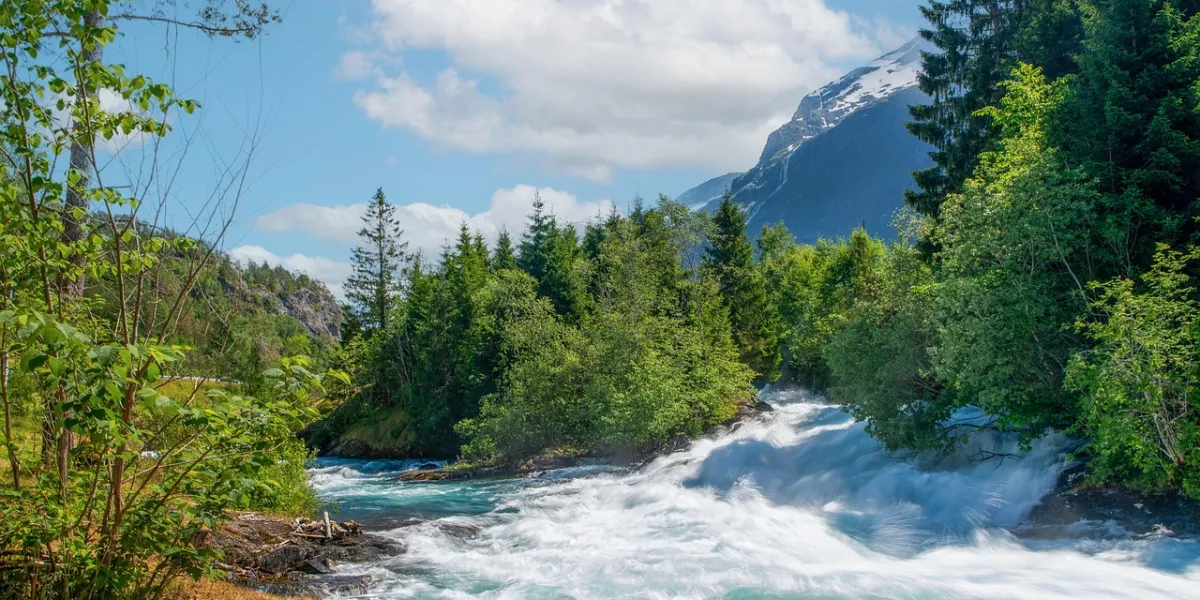
Initially, the camper offered online was not available, but a good alternative was quickly provided. The communication regarding the various steps to be taken is clear. The camper was from 2025 and was clean and complete. The pick-up in Norway took longer than expected (4 hours), but in the end, it became a vacation to never forget. Highly recommended!
Scandinavia is best explored at the pace of its landscape: deep fjords and winding roads in western Norway, fishing villages above the Arctic Circle, the lakes and forests of Sweden, then the dunes and bridges of Denmark. Our rental partners offer pick-ups in all three countries, notably in Oslo, Bergen, Stavanger, Tromsø, Stockholm, Gothenburg, Malmö and Copenhagen, with dense coverage in Norway and sparser coverage in Denmark.
A motorhome makes sense here because of the distances and the lack of accommodation in the most remote places. You do have to accept changeable weather, tunnels and fjord crossings that lengthen journeys, and days that are very long in summer and very short in winter. On the map everything looks close: on the road, nothing really is.
Our 9 rental partners in Scandinavia
-
Alm Fritid
Rental company category:Standard
-
Anywhere Campers
Rental company category:Standard
-
CrossRent
Rental company category:Standard
-
McRent
Rental company category:Standard
-
Motorhome Norway
Rental company category:Standard
-
Nordic Campers
Rental company category:Standard
-
Rent Easy
Rental company category:Premium
-
Skandi Trip Premium Motorhomes
Rental company category:Premium
Public rating of the rental company:
4.1/5
(162 reviews)
-
Touring Cars
Rental company category:Standard
Where to pick up your motorhome in Scandinavia?
Choose your departure city: the map shows where rental companies hand over their vehicles.
The best itineraries in Scandinavia
1 Hardangerfjord and Lysefjord, from Bergen to Stavanger
- Bergen
- Eidfjord
- Odda
- Haugesund
- Stavanger
- Lysefjord
From Bergen, the road follows the Hardangerfjord, with its orchards in blossom in May and villages such as Eidfjord or Odda, the starting point for hikes to Trolltunga. You then head down the west coast, with several fjord crossings by ferry or undersea tunnel, to the Haugesund area and then Stavanger. The Lysefjord and the Preikestolen rock are half a day away.
Bergen and Stavanger are about 160 km apart as the crow flies, but the real journey is much longer because of the fjords. A one-way trip between the two cities depends on the rental companies and dates: select two different depots in the search to see what is on offer.
- Distance
- about 450 km
- Recommended vehicle
- Coachbuilt motorhome or campervan
2 Geirangerfjord and the Troll Road, from Ålesund to Trondheim
- Ålesund
- Geiranger
- Trollstigen
- Åndalsnes
- Atlantic Road
- Trondheim
Ålesund, an Art Nouveau town set on islands, opens the road to the Geirangerfjord and its waterfalls, then to the Trollstigen and its eleven hairpin bends. Further north, the Atlantic Road hops from islet to islet on curving bridges before reaching Trondheim and its Nidaros Cathedral, a pilgrimage destination.
The Trollstigen and some mountain roads close in winter and often reopen between late spring and early summer, depending on the snow. Check road conditions before setting off: the direction of this route depends on rental company availability in Trondheim.
- Distance
- about 500 km
- Recommended vehicle
- Compact motorhome or campervan
3 Lofoten, from Narvik to Bodø
- Narvik
- Svolvær
- Henningsvær
- Reine
- Å
- Moskenes ferry
- Bodø
From Narvik, an ore town at the foot of the mountains, the E10 leads to the Lofoten archipelago: peaks plunging into the sea, red rorbuer cabins at Reine, pale beaches at Haukland and, at the end of the road, the village of Å. You return by sea, on the Moskenes to Bodø ferry, or by the same route back to the mainland.
The road crosses the archipelago over islands linked by bridges, but motorhome pitches fill up quickly in summer and wild parking is increasingly restricted. Book the ferry and your nights in advance. A depot is also listed directly in the Lofoten.
- Distance
- about 800 km
- Recommended vehicle
- Compact motorhome
4 Tromsø, the Arctic coast and the North Cape
- Tromsø
- Alta
- North Cape
- Alta
- Senja
- Tromsø
From Tromsø, the route crosses the fjords of Finnmark towards Alta and its rock carvings, then climbs to the North Cape, on the island of Magerøya. The landscape turns to treeless plateaus, bogs and herds of reindeer, often on the road. On the way back, you can branch off west to the island of Senja and its pointed peaks.
On this route, distances are long and fuel stops rare: fill up as soon as you can. Kirkenes, further east near the Russian border, offers another starting point for the tracks into Lapland. One-way hire is possible depending on the depots and dates.
- Distance
- about 1,400 km
- Recommended vehicle
- Motorhome or campervan
5 From Oslo to Copenhagen via Gothenburg and the Øresund
- Oslo
- Gothenburg
- Helsingborg
- Malmö
- Øresund Bridge
- Copenhagen
This route links three regional capitals: Oslo, the Swedish west coast around Gothenburg and its archipelagos, then the Scania plain to Malmö. The Øresund Bridge, about eight kilometres long, then crosses the strait to Copenhagen, with its canals and quays. The roads are fast and there are plenty of motorhome areas.
Crossing three countries requires the rental company's approval: mention it when you book. A one-way trip between two pick-up cities is sometimes possible, depending on the rental companies and dates. To add to the trip, Funen and Jutland offer beaches and parks from Odense, Aarhus and Aalborg.
- Distance
- about 650 km
- Recommended vehicle
- Motorhome or campervan
When to go in Scandinavia?
May and June
Days lengthen quickly: in Stockholm, the sun shines on average more than twelve hours a day in May and more than fourteen in June. The fjords are green, meltwater feeds the waterfalls, campsites open and crowds are still thin. In the North, above the Arctic Circle, snow can still close passes. The midnight sun begins in Tromsø around mid-May.
July and August
The busiest season, with Nordic school holidays and European holidays. In Copenhagen, the sea reaches 19 °C; in Stockholm, 22 °C. Bergen stays very wet, with 189 mm in July and 253 mm in August. The midnight sun lasts until about the end of July in the north, but campsites and ferries fill up: book well in advance.
September
Autumn colours arrive on the northern tundra, roads empty and the first northern lights appear. Nights become dark enough to see them in Tromsø. In Bergen, September is already very wet, with 278 mm of rain; in Stockholm, the sea is still 19 °C. Some campsites close at the end of the month.
October to April
Winter motorhoming is for well-prepared travellers. In Tromsø, the sun shows for an average of 0.1 hours a day in January and not at all in December. The northern lights are at their best from September to March. Bergen gets 274 mm of rain in December, while the cold in Oslo is dry. Heating, winter tyres and campsites open all year are essential.
Renting in Scandinavia, step by step
-
1
Choose the starting area
Bergen, Stavanger and Ålesund for the fjords, Tromsø, Narvik, Bodø or Evenes for the North, Oslo for southern Norway, Stockholm or Gothenburg for Sweden, Copenhagen for Denmark. A city well served by flights makes arrival simpler.
-
2
Compare and book early
The search shows offers for your dates. In high summer, lock in the vehicle very early, then ferry crossings, campsites and excursions. Tell the rental company if you plan to change country.
-
3
Allow for ferries, tunnels and tolls
Build each day with a margin for crossings and tunnels, then resupply stops. In the North, the nearest shop can be more than an hour's drive away: take provisions and what you need to cook.
-
4
Return the vehicle
Check drop-off times, the fuel tank and the emptying of the water tanks. In northern Norway, the road back to the airport can depend on a ferry or a tunnel: keep a margin before your flight.
Everything to know before hitting the road
Automatic tolls in Norway
Most Norwegian tolls have no barrier: cameras read the plate and the bill follows. For a hire vehicle, the rental company receives the request, then re-invoices it, sometimes with fees. Ask how it handles this before you leave, and apply the same logic to toll tunnels and bridges.
Fjord ferries and long crossings
Several Norwegian roads include ferry crossings, sometimes every half hour, sometimes much less often. They are part of the route and of the length of the day. At summer peak times, a queue is possible. For the Lofoten, the islands and links between countries, find out about booking and the maximum vehicle length accepted.
Allemansrätten: what the right of public access allows
In Sweden and Norway, the right of public access to nature, allemansrätten or allemannsretten, is mainly intended for hiking, foraging and lightweight tents, away from homes. It does not mean you may park a motorhome anywhere overnight. Rules change from place to place, and Denmark is more restrictive: check locally.
Reindeer, elk and daytime headlights
In the North, reindeer cross the road without warning; in Sweden, it is elk, especially at dawn and dusk. Dipped headlights must stay on during the day in all three countries. Slow down in forests and on plateaus, and respect speed limits that are often low, enforced by fixed and mobile speed cameras.
Long tunnels and narrow roads
Western Norway has very long tunnels, sometimes with alternating one-way traffic or underground roundabouts, and single-track roads with passing places. A large motorhome calls for patience, and mountain passes close in winter. Check the vehicle's height and width before taking minor roads.
Your questions about a road trip in Scandinavia
Where can I hire a motorhome in Scandinavia?
Anywhere Campers has depots in all three countries, McRent and Touring Cars mainly in Norway and Sweden, Rent Easy and Motorhome Norway in Norway, Nordic Campers in Oslo, Skandi Trip and CrossRent in Sweden. Alm Fritid also offers vehicles in Sweden. Your confirmation gives the exact address.
How long should I allow for Scandinavia?
Allow a week for a single region, such as the western fjords or the Lofoten, and two to three weeks to link Oslo, Sweden and Copenhagen. For the North Cape from Tromsø, ten days leaves time for stops. Real distances are far greater than they look on the map.
Which road is the most beautiful?
It depends on the scenery you are after. The western fjords and the Trollstigen offer the grandest settings; the Lofoten, mountains plunging into the sea; the North, silence and light. Swedish and Danish roads are gentler, with lakes, islands and beaches.
Can I see the midnight sun and the northern lights?
Yes, in the North. The midnight sun can be seen around Tromsø from mid-May to about the end of July; the northern lights are visible from September to March, under clear skies. Both phenomena are possible in the same region, but never in the same season, and the weather always decides.
Which pick-up city for a first trip?
Oslo and Bergen are the simplest for discovering the fjords: many rental companies are based there and the roads open early. Stockholm and Copenhagen suit an easier, less mountainous trip. Keep Tromsø or Bodø for an experience beyond the Arctic Circle.
They travelled in Scandinavia with CoolDrive Nomad
No unpleasant surprises
The whole booking, communication, and actual rental experience has been smooth, effective, and enjoyable. Not sure how that could have been any better, at least in our experience, other than perhaps a final communication just before the start of the rental (but really, we had all info and details already). Collection and return of the motorhome was smooth and friendly staff (from iCaravan). All in all, very positive and after our first motorhome adventure being such a joy, we will do this again next year(s), and will check out Cooldrive/Nomad first for options and prices.
FAQ — Motorhome hire in Scandinavia
What licence do I need for a motorhome in Scandinavia?
A category B licence is fine for light hire vehicles, under 3.5 tonnes. Norway is not in the European Union but recognises European licences. With a licence issued outside Europe, ask the rental company about an international permit. The driver must also show a valid ID.
Can I cross from one country to another?
Often yes, with the rental company's approval: Sweden and Denmark are in the Schengen area, and so is Norway. For crossings involving Norway, customs checks exist, notably on food and alcohol: find out before you leave. The Øresund Bridge links Sweden to Denmark without a ferry.
Can I take the ferry between countries?
Yes, if the rental company allows it. Links connect Denmark to Norway, such as Hirtshals to Kristiansand, or Frederikshavn to Gothenburg. Check the conditions of the offer, then book the crossing with the vehicle's length and height. Timetables and fares change with the season.
Where can I sleep in a motorhome in Scandinavia?
Campsites and motorhome areas are the simplest solutions, with facilities that are often complete. Wild camping depends on the country, the municipality and the place: the right of public access does not cover all overnight parking. Check locally, and leave the site clean.
Do I have to pay to enter Stockholm?
Stockholm applies a congestion charge in the centre, detected by cameras, like some Norwegian tolls. The rental company receives the bill and passes it on. Find out about the zone and how these fees are handled before you pass through, as the rule may change.
Are the roads open all year?
No. Several Norwegian mountain roads, including the Trollstigen, close in winter and reopen depending on the snow. Main roads stay open, but sometimes require winter tyres or chains. For a hire outside summer, ask the rental company what is supplied and check road conditions before each leg.
Why take a motorhome to Scandinavia
Scandinavia rewards travellers who like to stop: a fjord at first light, a headland in the evening glow, a Swedish lake at the end of the day. A motorhome lets you follow these moments without depending on hotel schedules, in regions where accommodation becomes scarce as soon as you leave the cities.
Pick-ups are spread between western and northern Norway, southern and central Sweden and a few Danish cities. Each opens a different trip: the fjords from Bergen or Ålesund, the Arctic from Tromsø, or a route between capitals over the Øresund Bridge. The roads take time, but they are part of the journey.