


Follow-up and kindness of contact personnel.
J.
Germany · Jul 2023
Trustpilot
Alps, lakes, castles and Franconian towns, departing from Munich, Nuremberg, Regensburg, Würzburg and Lindau
Bavaria packs into a single region landscapes you would normally associate with several countries: the limestone peaks of the Zugspitze, the lakes of the Alpine foothills, the castles of Ludwig II, the ramparts of Rothenburg, the vineyards of Franconia and the Danube at Regensburg. Ten departure cities are available, including Munich, Nuremberg, Regensburg, Würzburg, Lindau, Ansbach, Fürth and Günzburg, with six rental companies: Anywhere Campers, Autocaravan Express, CrossRent, DRM, McRent and Rent Easy.
Germany is a country made for motorhomes: well-equipped parking areas, well-maintained roads and clear signage. The catch is the calendar. Summer brings thunderstorms to the Alps, Oktoberfest takes over Munich at the end of summer, and the best-known sights, such as Neuschwanstein, can only be visited by reservation. It is best to choose your departure city according to the mountains you want to reach.
Choose your departure city: the map shows where rental companies hand over their vehicles.
Starting from Würzburg, with its Prince-Bishops' Residence and the vineyards of the Main valley, the Romantic Road heads south through Rothenburg ob der Tauber, a walled town you can walk around along the ramparts, then Dinkelsbühl and Nördlingen, whose centre sits inside an impact crater. It continues to Augsburg before reaching Füssen, the Wieskirche and the castles of Hohenschwangau and Neuschwanstein.
Füssen has no rental depot: it is a stopover. A one-way rental from Würzburg to Munich depends on the rental company and the dates; otherwise, plan on driving back by motorway. Book your Neuschwanstein tickets in advance, as entry is by timed slot.
From Nuremberg, with its old town, its imperial castle and the Nazi Party Rally Grounds museum recalling its Nazi past, the road heads north to Bamberg, a UNESCO-listed city with its cathedral and its smoked-beer breweries. It carries on to Bayreuth, Wagner's city, then crosses Franconian Switzerland, a plateau of limestone cliffs, caves and small brewing villages.
Departures from Fürth and Ansbach, close to Nuremberg, offer the same route. The roads of Franconian Switzerland are narrow and popular with cyclists: slow down in the villages and don't expect room for a large vehicle in the brewery courtyards.
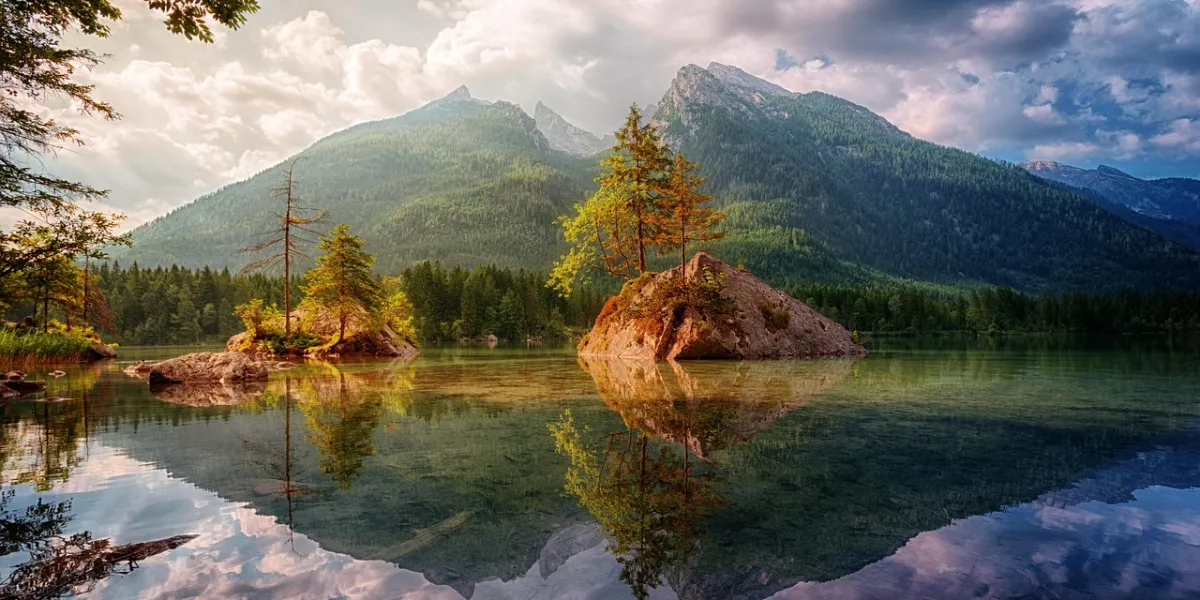
From Munich, the road runs along the Starnberger See and then the turquoise waters of the Walchensee, before Mittenwald and Garmisch-Partenkirchen, at the foot of the Zugspitze, the country's highest peak. The return passes by Linderhof Palace or Ettal Abbey. A second loop, to the east, links the Chiemsee, its islands and its Herrenchiemsee castle, then Berchtesgaden and the Königssee, a lake enclosed by sheer rock walls.
Each loop takes four to five days. Only electric boats operate on the Königssee. Traffic on Alpine roads is heavy on summer weekends: set off early in the morning and plan short stages.
Regensburg, with its 12th-century stone bridge and its UNESCO-listed old town, opens up the Danube valley. The route passes through Kelheim, where boats travel up the Danube Gorge to Weltenburg Abbey, then Straubing and Passau, the city of three rivers, on the Austrian border. From there, you head back up to the Bavarian Forest, its national park and the Arber massif.
Along the Danube, a very busy cycle path runs beside the road: take extra care at junctions. In the Bavarian Forest, the roads are winding but not especially difficult, and there are plenty of parking areas.
Lindau sits on an island in Lake Constance, linked to the shore by a causeway: its harbour is guarded by a Bavarian lion and a lighthouse. From there, the road follows the shore towards Wasserburg, then heads into the Allgäu, a land of meadows and cheese dairies, as far as Oberstdorf, the base for hikes to the Breitach Gorge. It ends at Füssen, from where you can reach the castles of Ludwig II.
Lake Constance also borders Austria and Switzerland: check with the rental company before crossing the border. This region is rainier than northern Bavaria, with frequent fog in spring.
Spring brings the meadows into flower and the Alpine roads are open, even if snow lingers at altitude. In Nuremberg, April stays dry with 48 mm of rain, but May and June bring thunderstorms. In Munich, May and June exceed 115 mm, the wettest months of the year. In Nuremberg, June has 12 hours of sunshine a day.
German school holidays fill the campsites on the lakes and in the Alps. In Munich, the temperature reaches 24 °C but rainfall remains heavy, with 120 to 125 mm and around fifteen rainy days a month: sunshine and thunderstorms alternate. In Lindau, August receives 182 mm of rain. Choose stops close to the lakes for swimming and keep the afternoons for indoor visits.
The forests and valleys take on their autumn colours, the light is crisp and visitor numbers drop after the holidays. In Munich, rainfall falls from 96 mm in September to 69 mm in October, and sunshine remains at 9 hours a day in September. Oktoberfest, from the end of September to the beginning of October, packs the campsites around the city.
The Christmas markets in Nuremberg and Munich bring December to life, but the days are short: in Nuremberg, January has 3.5 hours of sunshine a day. Nights fall below freezing and snow covers the Alps. Many campsites close; favour year-round parking areas and plan for a heated vehicle equipped for snowy roads.
Munich for the Alps and lakes, Lindau for Lake Constance and the Allgäu, Nuremberg, Fürth or Ansbach for Franconia, Regensburg for the Danube and the Bavarian Forest, Würzburg for the Romantic Road. Fraunberg and Feldkirchen, where CrossRent has a depot, are off-centre pick-ups.
Munich is the most convenient gateway, with an international airport. Nuremberg also has an airport, while Regensburg and Würzburg are reached mainly by train. The two cities are linked by a high-speed train: allow for the journey to the depot afterwards.
Neuschwanstein and Linderhof are visited with timed tickets; the boats on the Königssee and the Chiemsee run to a timetable. Also book the lakeside campsites for July and August, and pitches near Munich during Oktoberfest.
Check the weather and the condition of the passes before each Alpine day. Thunderstorms break quickly in the afternoon; do the mountain stages in the morning, and keep a day without driving in reserve for foggy or rainy days.
Bring the motorhome back to the address and at the time shown on your confirmation, with the tank and toilet in the condition required. Depots in the region are often located in industrial estates: check the route and access before the last day.
In Germany, the winter tyre requirement applies whenever the road is icy, snowy or slushy, not from a fixed date. In the Bavarian Alps, snow can return in April and from October onwards. Check the motorhome's equipment with the rental company, and don't count on snow chains for a large vehicle without having tried them.
German motorways are toll-free for light vehicles, and therefore for most rental motorhomes. Several cities, including Munich, Nuremberg and Regensburg, have introduced low-emission zones that require a green sticker. The rules change: ask the rental company whether the vehicle complies and check before driving into the centre.
Overnight parking outside designated areas is regulated by the municipalities: in national parks such as Berchtesgaden or the Bavarian Forest, it is prohibited. You will find Stellplätze, motorhome parking areas by lakes, villages or vineyards, often a few minutes' walk from the centre. They are paid and fill up quickly in summer.
On Sundays and public holidays, most shops in Bavaria are closed, supermarkets included: do your shopping on Saturday. At campsites and on parking areas, quiet hours are observed at lunchtime and at night. Catholic public holidays, such as the Assumption on 15 August, are more numerous than elsewhere in Germany.
Much of the German motorway network has no general speed limit. A motorhome is quickly overtaken there: keep to the right and leave plenty of distance. In the Alps, long descents call for engine braking to avoid overheating. Tunnels and some passes ban large vehicles: check your vehicle's height.
A week is enough for one area: the Alps, Franconia or the Danube. In two weeks, you can combine Munich, the Alpine south and the Romantic Road. For a tour of all of Bavaria, from Würzburg to Berchtesgaden and then the Danube, allow three weeks.
Munich offers the most choice, with six rental companies, and quickly leads to the Alps. Nuremberg, with four rental companies, suits Franconia. Regensburg and Lindau are smaller, but open up the Danube or Lake Constance. The straight-line distances, from 105 to 156 km from Munich, can still be covered in a day.
The Romantic Road, from Würzburg to Füssen, is the best known, with its walled towns. In the Alps, the road between Mittenwald and Garmisch, then on to the Walchensee, offers the finest scenery. Franconia, more low-key, charms with its villages and breweries.
Yes, but with precautions. The cities of Nuremberg, Munich and Würzburg are pleasant for their Christmas markets, with highs of 4 to 5 °C in December. In the Alps, snow and frost call for an equipped vehicle and short stages; several campsites are closed.
Yes. Salzburg is close to Berchtesgaden, Tyrol borders Garmisch and Füssen, and Switzerland and Austria both border Lake Constance at Lindau. Check with the rental company that you have permission to cross, and the motorway vignettes of the neighbouring countries, which are compulsory for driving on their motorways.
Follow-up and kindness of contact personnel.
Hassle-free booking, quick and courteous pick-up and drop-off. Prompt and attentive response to questions.
Ease of use, clarity of the site, very easy to find all the information we need, I highly recommend this platform!
A category B licence is enough for a motorhome up to 3.5 tonnes, and a European Union licence is recognised in Germany. A licence issued outside the EU may require an international driving permit or a translation: ask the rental company. The minimum age and the number of years of licence required vary by offer.
Only in designated areas. Wild camping is prohibited in national parks and tightly regulated elsewhere; check with the local municipality. Stellplätze, often close to towns and lakes, remain the simplest solution, sometimes with water and waste disposal on site.
Not for a light leisure vehicle on German motorways. The toll applies to heavy goods vehicles. Some bridges or tunnels and the motorways of Austria and Switzerland require a vignette or a payment: check before the border.
Often, depending on the rental company and the dates. In the search engine, choose a different drop-off location, for example Munich for pick-up and Nuremberg for return: the compatible offers are displayed, and any one-way supplement is already included in the price.
The answer varies by rental company and model, sometimes with a cleaning fee. In national parks, dogs must be kept on a lead. Travelling with a pet in Austria or Switzerland involves health formalities: check them before departure.
Book very early for July, August and the end of September, when Oktoberfest attracts visitors from all over the world and fills the campsites around Munich. Outside these periods, you can still find availability a few weeks before departure.
Bavaria offers very different scenery in a single trip: mountains and lakes in the south, medieval towns between Würzburg and Dinkelsbühl, Franconian breweries, the limestone plateau of the Danube. The motorhome links these stops with no suitcase to unpack, and you sleep beside a lake or a vineyard, a few minutes from the centre.
The pick-up points are split between the south, with Munich, Fraunberg, Feldkirchen and Lindau, and the north, with Nuremberg, Fürth, Ansbach, Würzburg and Regensburg, plus Günzburg in the west. Each opens up a different route, and Austria, Switzerland and the Czech Republic are within easy reach by road.