

Andes Campers Rental company category:Standard
-
Andes Campers IquiqueIquiqueView map
Camper vans and motorhomes for the pampa, the oases and the Tarapacá altiplano
Compare the 3 campervan and motorhome rental companies in Iquique to find the best price, and book at the price shown, mandatory fees included.
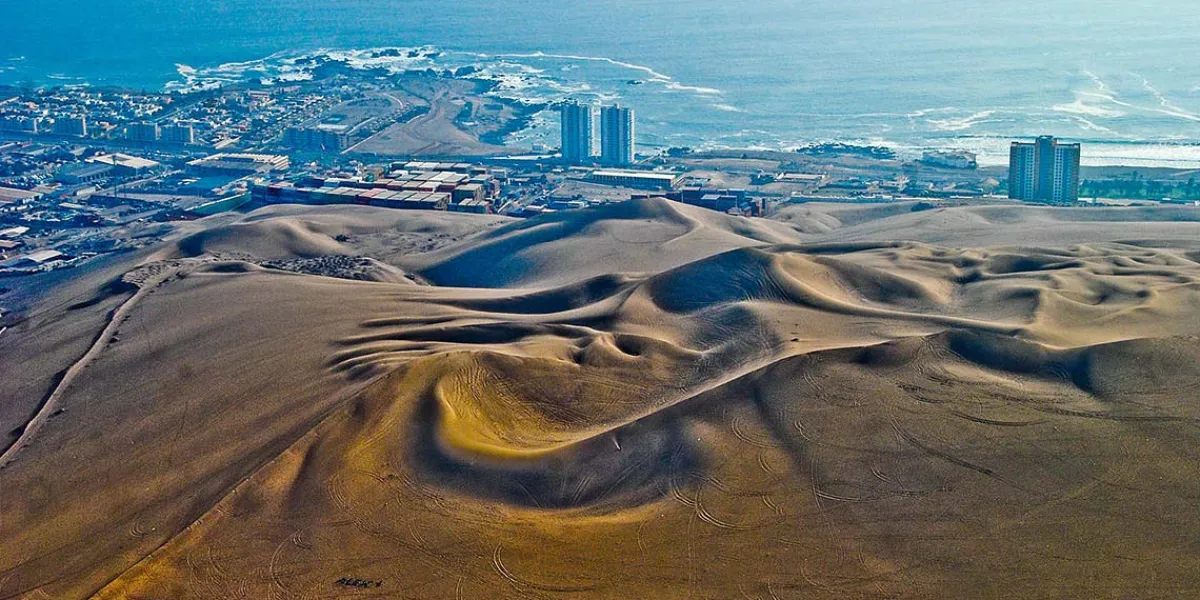
Hiring a campervan in Iquique means setting off from a Pacific port squeezed between the ocean and a huge coastal cliff, at the foot of Cerro Dragón, a giant dune sitting right in the city. Up on the plateau, the Tamarugal pampa holds the ghost nitrate works of Humberstone and Santa Laura, the desert geoglyphs and the Pica oasis; higher still, the Colchane altiplano leads to Aymara villages and the volcanoes of the Bolivian border. 3 partner companies hand over their campervans and motorhomes in Iquique: Andes Campers, Camper Travel and Holiday Rent RV.

Public ratings collected on October 28, 2026 from independent review sites.

Route 16 climbs onto the pampa to Humberstone and Santa Laura, abandoned nitrate works listed as World Heritage, where factories, a theatre and workers' houses tell the story of the nitrate boom. The sanctuary of La Tirana comes before Pica, an oasis of lemon and mango trees with the thermal pool of Cocha Resbaladero, then the church of Matilla. On the way back, the Cerros Pintados geoglyphs cover an entire hillside in the Pampa del Tamarugal reserve.
Near Huara, a short dirt track leads to the Giant of Atacama, a huge human figure drawn on the side of Cerro Unita, to be viewed from the foot of the hill. Route 15, used by trucks heading to Bolivia, then climbs past the hot springs of Chusmiza to Colchane, on the altiplano, at almost 3,700 metres. Volcán Isluga National Park, with its llamas, lagoons and the white church of Isluga, rewards the climb.
This long one-way trip first follows Route 1, squeezed between the cliff and the ocean, with its fishing coves and empty beaches, to the mouth of the Loa river, the boundary between the Tarapacá and Antofagasta regions. After the port of Tocopilla, Route 24 climbs inland across the Atacama Desert to Calama, then San Pedro de Atacama, where our partners also take their vehicles back.
The shoulder seasons are ideal for combining the coast and the interior: mild days in Iquique, a sea that is still pleasant and a dry, bright altiplano, outside the summer storms. In October and November the sun shines twelve to thirteen hours a day; in April and May the beaches empty after the Chilean holidays.
The southern summer brings the hottest days and the warmest sea, around 20 °C in February and March, on the beaches of Cavancha and the south coast, which are very busy during the Chilean holidays. At altitude, it is the season of the altiplano winter: afternoon storms and tracks sometimes cut around Colchane.
Winter stays mild on the coast, but the camanchaca, a sea fog rolling in from the Pacific, often veils the sky in the morning. On the pampa nights turn cool, and on the altiplano temperatures drop well below freezing: heating and warm sleeping bags are essential. In mid-July, the religious festival of La Tirana draws huge crowds of dancers and pilgrims.
Most pleasant months: All year round.
| Month | High | Low | Rain | Sun | Sea |
|---|---|---|---|---|---|
| Jan | 25 °C | 20 °C | 1 mm | 12 h/day | 19 °C |
| Feb | 26 °C | 21 °C | 2 mm | 12 h/day | 20 °C |
| Mar | 25 °C | 20 °C | 0 mm | 12 h/day | 20 °C |
| Apr | 23 °C | 18 °C | 0 mm | 11 h/day | 19 °C |
| May | 21 °C | 16 °C | 1 mm | 11 h/day | 17 °C |
| Jun | 19 °C | 15 °C | 2 mm | 10 h/day | 17 °C |
| Jul | 18 °C | 14 °C | 2 mm | 10 h/day | 17 °C |
| Aug | 18 °C | 13 °C | 2 mm | 11 h/day | 17 °C |
| Sep | 19 °C | 14 °C | 1 mm | 11 h/day | 17 °C |
| Oct | 20 °C | 15 °C | 1 mm | 12 h/day | 17 °C |
| Nov | 22 °C | 16 °C | 0 mm | 13 h/day | 18 °C |
| Dec | 23 °C | 18 °C | 0 mm | 13 h/day | 18 °C |
Averages 2016–2025 computed from Open-Meteo data (ERA5 reanalysis).
Towards Humberstone, Pica or the Pan-American Highway, Route 16 climbs the cliff to Alto Hospicio on a long, steep slope shared with trucks from the port and the free zone. On the way down to Iquique, shift down and use engine braking to spare the brakes of a loaded motorhome.
Petrol stations become scarce as soon as you leave Iquique, Alto Hospicio and Pozo Almonte, and there are almost none on the road to Colchane. Fill up and shop before heading up, carry water for several days and keep a fuel margin for the way back. In Pica, buy the lemons and mangoes of the oasis.
The Iquique free zone, the Zofri, is a vast duty-free shopping centre, handy for completing your camping gear. When leaving the region by road, customs posts check goods bought duty-free: keep your receipts. There are also agricultural checks on the Pan-American Highway; find out the rules before carrying fresh fruit.
The centre is best explored on foot: Baquedano street lines up its wooden houses from the nitrate era as far as Plaza Prat and its clock tower, not far from the Palacio Astoreca. Leave the vehicle at the campsite or in a guarded car park near Cavancha beach, and keep valuables out of sight.
Three partner companies each have a depot in Iquique: Andes Campers, Camper Travel and Holiday Rent RV. The exact meeting point is shown in your booking confirmation. Comparing their offers helps you choose the vehicle suited to your route: well heated for the altiplano, more compact if you plan to drive the narrow streets of the centre.
The amount depends on your dates, the length of hire and the model chosen. To find out, run a search: each available offer from the Iquique rental companies shows a price per day, mandatory fees included, which you can book straight away. Moving your departure date by a few days is sometimes enough to change the rate.
Yes, our partners also start from Arica, about 310 km away on the Pan-American Highway, and from Calama, San Pedro de Atacama, Antofagasta and Copiapó. A one-way trip saves you driving the long desert straights in reverse. Enter the return city when searching: any one-way fees are then included in the displayed price.
From Iquique, at sea level, you reach the altiplano in a single day, a sudden climb for the body. Spend a few days on the pampa or in Pica first, drink plenty, avoid alcohol and exertion once at altitude, and come straight back down if you have a severe headache or are short of breath at rest. Children and vulnerable people need extra care.
Yes, but preferably via Arica: from there, the paved Route 11 climbs to Putre and then to Lake Chungará, at the foot of Parinacota volcano, at over 4,500 metres. From Colchane, the tracks along the Salar de Surire towards Lauca are remote and for 4x4s only. A one-way trip from Iquique to Arica lets you include Lauca without retracing your steps.
The Colchane border post, facing Pisiga, opens the road to Oruro and the Salar de Coipasa, but it sees a lot of truck traffic. Many rental contracts exclude Bolivia. If your company agrees, ask at the time of booking for the documents authorising the vehicle to leave the country and for insurance covering Bolivia, without which customs will refuse entry.
They have always responded quickly to all my requests and their website is very functional!
Fast service
The booking process is very smooth. I had very good communication with the Cooldrive team. As for the follow-up, it will be seen on site during the vehicle pickup.
Diego Aracena International Airport is about 40 km south of the city, by the ocean. Coastal Route 1 reaches the centre in about forty minutes, running past beaches and fishing coves. Taxis, shared transfers and minibuses provide the link; let the rental company know your landing time to arrange the vehicle handover.
In Chile, you drive on the right. Bring your national licence together with an international driving permit, recommended for foreign drivers and often requested at carabineros checks on the Pan-American Highway. Keep your passport and vehicle papers within reach, as the region's customs posts ask for them. Each rental company also sets a minimum age in its conditions.
Iquique has a few campsites, and several beaches south of the city, along the coast road, welcome campers, sometimes for a fee in summer. At protected sites such as Humberstone, the geoglyphs or the Pampa del Tamarugal reserve, only sleep in designated areas. Elsewhere, check the local rules and avoid isolated roadsides.
Not for the essentials: Humberstone, La Tirana, Pica, the Pan-American Highway and the road to Colchane are paved. Access to the Giant of Atacama and Cerros Pintados is by short dirt tracks, passable in a campervan in dry weather. The Salar del Huasco, above Pica, and the altiplano tracks, however, call for a high-clearance vehicle or even a 4x4.
Several months ahead for January and February, the southern summer and Chile's main school holidays, and for July, which combines the Chilean winter holidays with the northern hemisphere summer. From April to June and September to November, a few weeks are usually enough. With three depots in the city, the number of available vehicles remains limited.
Iquique is a world reference for paragliding: steady winds rising up the cliff make flying possible almost all year, with landings on the beaches. Surfers ride the reef waves of Playa Brava and Cavancha, Cerro Dragón can be sandboarded, and the Esmeralda corvette museum recalls the 1879 naval battle in the bay.
Few cities let you go from the ocean to the desert and then to the high Andean plateaus in a single day's drive. From Iquique, you can link the beaches of Cavancha, the nitrate works of Humberstone, the Pica oasis and the pampa geoglyphs, before reaching the Aymara villages of Colchane, where llamas graze at the foot of the volcanoes.
Three partner companies, Andes Campers, Camper Travel and Holiday Rent RV, hand over their vehicles here, and Arica, Calama, San Pedro de Atacama or Antofagasta, other departure cities, let you extend the trip one way to the north or south of the desert. With almost no rain and ten to thirteen hours of sunshine a day depending on the month, the climate suits travel all year round: just plan for cold nights at altitude and long distances between villages.