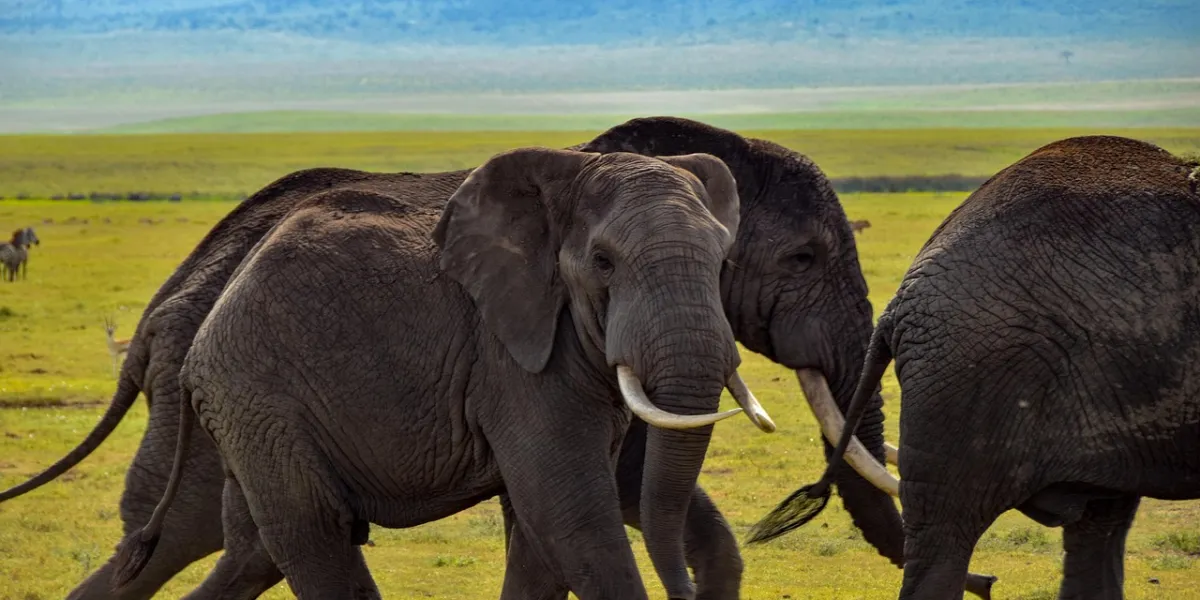
Camping-equipped 4x4s, picked up in the heart of the Serengeti
Compare campervan and motorhome rental companies in Seronera to find the best price, and book at the price shown, mandatory fees included.
rental partner
1
branch
1
Safari Masters, one depot in Seronera
Airstrip in the centre of the Serengeti
Arusha 236 km as the crow flies
Pleasant months: January to March, May to October
Park tracks open in daylight only
Find a vehicle
Our rental partner in Seronera
No card fees
Pay in instalments at no extra cost
100% secure payment
Covid guarantee included
GDPR protection
In Seronera, campervan hire takes the form of a 4x4 equipped for camping, handed over right in the heart of Serengeti National Park. Seronera is not a town: it is the central sector of the park, with its airstrip, visitor centre, lodges and public campsites, along a river lined with acacias where lions and leopards hunt. You arrive by bush plane and head straight out onto the tracks, without the long day's drive from Arusha. Our partner company, Safari Masters, has a depot here.
The southern plains, the western corridor and the north of the park all radiate from this central point.
1Southern plains and the Ndutu calving grounds
3 to 4 days
about 250 km
Seronera
Simba Kopjes
Lake Ndutu
Lake Masek
Moru Kopjes
Seronera
South of Seronera, the track leaves the acacias for the short-grass plains where wildebeest gather to give birth early in the year. The Simba Kopjes, granite islands where lions keep watch, line the way to Lakes Ndutu and Masek, already inside the Ngorongoro Conservation Area, where cheetahs and hyenas follow the herds. The return runs past the Moru Kopjes, with their Maasai rock paintings and gong rock.
Ndutu is managed by a different authority from the park, with its own fees: check before spending the night there.
Distance
about 250 km
Recommended vehicle
4x4 equipped for camping, ideally from December to March
2Lobo, Kogatende and the Mara crossings
5 to 6 days
about 450 km
Seronera
Banagi
Lobo
Kogatende
Mara River
Lamai Triangle
Seronera
Heading north, the track crosses the river at Banagi, then climbs among the wooded hills and kopjes of Lobo, where the herds pause on their way back south at the end of the year. Further on, Kogatende overlooks the Mara River: in the dry season, wildebeest plunge into the current under the gaze of crocodiles, and you watch the crossings from the banks, following the rangers' instructions.
On the far bank, the Lamai Triangle remains the wildest sector of the park. Allow a long day's drive each way; the northern campsites get booked early.
Distance
about 450 km
Recommended vehicle
4x4 equipped for camping, full tank on departure
3One way via Loliondo and Lake Natron
3 to 4 days
about 450 km
Seronera
Lobo
Klein's Gate
Wasso
Lake Natron
Mto wa Mbu
Arusha
To leave the Serengeti without going back through the Ngorongoro, the Lobo track leads to Klein's Gate, in the park's north-east corner, then crosses the Maasai lands of Loliondo via Wasso. It then descends the Rift escarpment to Engare Sero, on the shore of Lake Natron, at the foot of Ol Doinyo Lengai, before rejoining the tarmac at Mto wa Mbu and reaching Arusha, where the vehicle is returned.
An isolated crossing, best done in the dry season with water and fuel reserves; local communities charge access fees, so carry cash.
Distance
about 450 km
Recommended vehicle
4x4 equipped for camping, one way
Weather and seasons
When to go in Seronera?
Best time
Dry season, June to October
June to October
highs 28 to 31 °C, lows 15 to 17 °C
The best time for a self-drive safari from Seronera: less than 20 mm of rain a month from June to September, dry tracks and short grass that reveals the big cats. In June and July, the herds cross the Grumeti in the western corridor, then move on to the Mara River, where they often stay until October. Days heat up to 31 °C in October, while nights stay mild.
Short rains, November and December
November to December
highs 28 to 30 °C, lows 17 °C
The showers return, with more than 100 mm of rain each month, often as late-afternoon storms. The herds come back down from the north through the east of the park towards the southern plains, which turn green within a few weeks. The Seronera valley remains a good viewing spot, but the black-soil tracks become slippery: ask the rangers before any detour.
Calving in the south, January to March
January to March
highs 28 to 30 °C, lows 16 to 17 °C
A pleasant season, with moderate rain and 11 hours of sunshine a day. Wildebeest gather around Ndutu and the southern plains to give birth, especially in February, and the predators follow them: it is the most spectacular time south of Seronera. Showers return in March; on the clay plains, a waterlogged track can become impassable within a few hours.
Long rains, April and May
April to May
highs 28 °C, lows 16 to 17 °C
April is the wettest month in Seronera, with 131 mm of rain, before a clear lull in May. The herds then cross the centre of the park heading west, and often pass through the Seronera valley. Several camps close and some secondary tracks are cut off: the park is almost empty, but a flexible schedule and good 4x4 skills are essential.
Climate in Seronera, month by month
Most pleasant months: February to March, May to October.
Month
High
Low
Rain
Sun
Jan
28 °C
16 °C
100 mm
11 h/day
Feb
29 °C
17 °C
61 mm
11 h/day
Mar
29 °C
17 °C
84 mm
11 h/day
Apr
28 °C
17 °C
130 mm
10 h/day
May
28 °C
16 °C
43 mm
11 h/day
Jun
28 °C
15 °C
11 mm
11 h/day
Jul
28 °C
15 °C
6 mm
10 h/day
Aug
29 °C
15 °C
13 mm
10 h/day
Sep
30 °C
16 °C
16 mm
11 h/day
Oct
30 °C
17 °C
38 mm
11 h/day
Nov
29 °C
17 °C
93 mm
11 h/day
Dec
28 °C
16 °C
111 mm
11 h/day
Averages 2016–2025 computed from Open-Meteo data (ERA5 reanalysis).
Practical tips
Everything to know before hitting the road
Arriving at Seronera airstrip
Domestic flights link Seronera airstrip with Arusha airfield and Kilimanjaro International Airport, sometimes with a stop at another airstrip in the park. Small aircraft limit baggage weight and prefer soft bags: check the airline's allowance. Agree with Safari Masters on the place and time of the 4x4 handover according to your flight schedule.
Driving in the park: strict rules
In the Serengeti, driving is in principle only allowed in daylight, and leaving the marked tracks is forbidden without special permission. Speed is limited, and you may only get out of the vehicle at designated places. These rules, set by the Tanzania National Parks authority, can change: have them confirmed by the rental company at handover and by the rangers on site.
Fuel and food in the middle of the park
There is no town around Seronera: shopping is limited to what the lodges and the few shops in the area offer, and fuel sold in the park can run out. Check the tank, water reserves and food at the 4x4 handover, and ask the rental company what is provided. Before heading north or to Lake Natron, always keep a fuel margin.
Nights in the public campsites
Seronera's public campsites are not fenced: lions, hyenas and buffalo walk through them at night. Stay in the tent or the vehicle after dark, keep food and rubbish inside the 4x4 and have a torch within reach. Nights are paid on top of the park entry, and the more isolated special campsites must be booked in advance.
What travellers ask
Your questions about a road trip in Seronera
Where can I pick up a camper 4x4 in Seronera?
Our partner company in Seronera is Safari Masters, which has a depot in the heart of the park. On site, the agent shows you the camping equipment, how to unfold the tent and the 4x4's controls before your first game drive. The exact meeting place and time are given in your booking confirmation: let the depot know your flight's landing time.
How much does it cost to hire a camper 4x4 in Seronera?
The rate varies with the month, the duration, the vehicle's equipment and the return town, a one-way trip to Arusha being common from Seronera. Run a search with your dates to see the actual price, mandatory fees included, bookable straight away. Budget separately for park fees, campsite nights and the domestic flight to the airstrip.
Can I return the vehicle somewhere other than Seronera?
Yes: Safari Masters also has depots in Arusha, Moshi, Kilimanjaro and Dar es Salaam. Returning the 4x4 in Arusha lets you drive back via the Ngorongoro or Lake Natron without returning to the centre of the park. Enter the return town in your search: any one-way fees are then included in the displayed price.
Where can I see leopards around Seronera?
The Seronera valley is renowned for its leopards, which spend the day stretched out on the branches of the sausage trees and acacias along the river. Drive the riverside tracks slowly early in the morning and late in the afternoon, binoculars in hand, scanning the forks of the trees. The Retima hippo pool, north of the valley, rounds off the outing nicely.
Can I see the Big Five around Seronera?
Lions, leopards, elephants and buffalo are fairly easy to spot in the central Serengeti. The black rhino is the exception: very rare, it lives mainly around the Moru Kopjes, under close protection, and is only seldom seen. Never leave the track to get closer, and ask the rangers which areas it has recently been seen in.
Verified customer reviews
They rented in Seronera with CoolDrive Nomad
4.3
818 reviews
First rental of this type of vehicle in a professional context where the rental must take place from France to Canada. Many questions and Cooldrive (Marlène) has been a valuable support in guiding my choices. Efficiency and responsiveness beforehand, and on-site a vehicle and service that met our expectations. No complaints. Great!
Alain L.
Canada · Oct 2025
Avis Vérifiés
Too rigid computer system
Eric L.
Portugal · Oct 2025
Avis Vérifiés
Very good customer experience with Cooldrive. I highly recommend it! Thanks to the team who were attentive and available for organizing my trip to Canada.
The park charges a fee per person for each 24-hour period, plus a vehicle fee and the cost of campsite nights. Payment is in principle electronic, rarely in cash. Amounts and accepted payment methods change regularly: check them with Tanzania National Parks, and ask the rental company how to pay the entry when the vehicle is handed over inside the park.
Can I reach the Ngorongoro Crater from Seronera?
Yes, via the track that crosses the southern plains to Naabi Hill Gate, then the conservation area to the crater rim, in about half a day. The Ngorongoro is run by a separate authority, with its own transit and descent fees and specific conditions for self-drivers: check before adding it to your itinerary.
Do I need off-road driving experience?
4x4 experience helps a lot: around Seronera, you drive on corrugated gravel tracks and, after rain, on black clay that clings to the wheels. Engage four-wheel drive before wet sections, always inspect a ford before crossing it and drive slowly. Traffic drives on the left; an international driving permit is a useful companion to your national licence.
Do I need a visa to get to Seronera?
Depending on your nationality, a Tanzanian visa may be required: apply online before departure, on the official immigration website. You present it on international arrival, at Kilimanjaro, Dar es Salaam or Zanzibar, before the domestic flight to Seronera. A yellow fever vaccination certificate may also be requested depending on where you are travelling from.
When should I book a 4x4 in Seronera?
Several months ahead for a departure between July and October, when the migration reaches the north and flights to Seronera fill up, and also for February, the calving season in the south. Book the vehicle, the domestic flight and the campsites together, especially special campsites. During the April and May rains, there is still plenty of choice.
Can I fly over the Serengeti in a hot-air balloon?
Yes, hot-air balloon flights take off at dawn in the Seronera area, with pick-up from nearby lodges and campsites. You float over the valley, its herds and its kopjes before breakfast in the savannah. The flight must be booked in advance with an approved operator and is paid separately; it depends on the wind and can be cancelled.
What is there at the Seronera visitor centre?
The Serengeti visitor centre presents the park's history, the migration cycle and the ecology of the savannah, with a short marked trail around a kopje where hyraxes and agama lizards live. There is a picnic area and toilets, and it is the right place to ask about track conditions.
About us
Why start from Seronera in a camper 4x4
Starting from Seronera means beginning your safari where most travellers only arrive after a long day on the tracks. The river valley, its big cats and its kopjes can be explored from the very first hour, and every region of the Serengeti radiates from this central point: the Ndutu plains to the south, the Grumeti to the west, Lobo and the Mara River to the north. Flying in from Arusha or Kilimanjaro spares you the approach drive.
Safari Masters hands over 4x4s here equipped for sleeping in the park's campsites. The most pleasant months run from January to March and from May to October, with the dry season offering the safest tracks. And since the company also has depots in Arusha, Moshi, Kilimanjaro and Dar es Salaam, the trip can end one way, via the Ngorongoro or Lake Natron.