



Excellent service, speed, and courtesy
T.
Spain · Sep 2025
Trustpilot
From the Biscay coast to the vineyards of Rioja Alavesa, departing from Bilbao, San Sebastián and Vitoria-Gasteiz
Campervan hire in the Basque Country, the Spanish region of Euskadi, links strikingly different landscapes within a few hours' drive: the Cantabrian coast and its fishing ports, the beaches of San Sebastián, the green mountains of Gipuzkoa and then the vineyards of Rioja Alavesa. Pick-ups are in Bilbao, San Sebastián and Vitoria-Gasteiz, with vehicles ranging from vans for two to family motorhomes sleeping six.
Distances are short, with Vitoria-Gasteiz just 46 km from Bilbao as the crow flies, and the region suits a single week as well as a longer trip into Cantabria, Navarre or the French Basque Country, just across the Bidasoa river. Pick your departure city according to what you want first: the ocean, the mountains or the vines.
Choose your departure city: the map shows where rental companies hand over their vehicles.
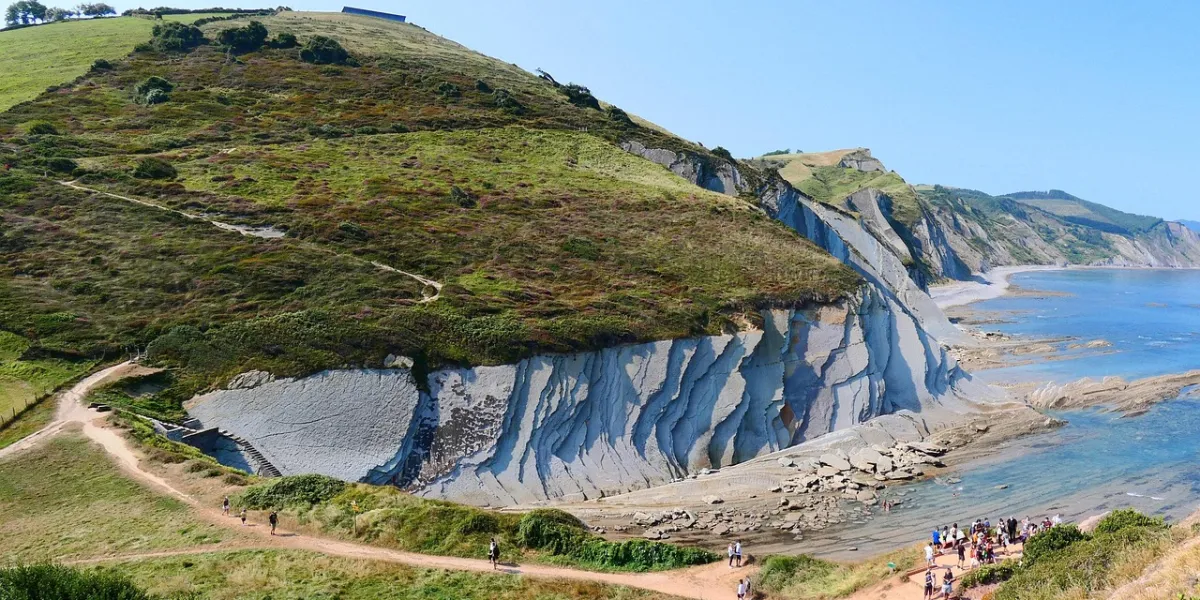
North of Bilbao, the Biscay coast opens onto the hermitage of San Juan de Gaztelugatxe, perched on its islet at the top of a stone stairway, then the Urdaibai estuary, a biosphere reserve, and the historic town of Gernika. Further east, Lekeitio, Zumaia and its flysch cliffs, then Getaria, home of txakoli wine, lead all the way to La Concha bay.
The coast road, slower than the motorway, strings together bends, harbours and surf beaches such as Bakio or Mundaka: plan short stages and leave time for stops.
From Vitoria-Gasteiz, seat of the Basque government and a city known for its green spaces, the road heads for the salt valley of Añana and its terraced salt pans, then crosses the Sierra de Cantabria and drops down to the vineyards of Rioja Alavesa. Laguardia, a fortified hilltop village, Elciego and Labastida are lined with old cellars and designer wineries.
The centre of Laguardia is closed to traffic: park below the walls. The grape harvest, in September and October, is the finest time to visit the bodegas.
Between Bilbao and San Sebastián, the interior holds limestone peaks and sheep pastures: Urkiola Natural Park and its rocky spires, the sanctuary of Arantzazu clinging to its gorge above Oñati, then Amezketa, a Gipuzkoa village at the foot of Txindoki, the emblematic summit of the Aralar range. The loop drops down through Tolosa before rejoining the coast.
Mountain pass roads are narrow and twisting: a van or compact motorhome feels more at home there. Amezketa has no depot and is reached from San Sebastián or Bilbao.
San Sebastián lies only a few kilometres from France: beyond Hondarribia and its houses with colourful balconies, you follow the Labourd coast through Saint-Jean-de-Luz and Biarritz, before heading inland to Espelette and Saint-Jean-Pied-de-Port. The Roncesvalles pass brings you back into Spain, through the beech forests of Navarre, to Pamplona, where our rental companies also offer pick-ups.
The climb to Roncesvalles is long and winding, and snow can fall there in winter. The way back to San Sebastián follows the Bidasoa valley or the motorway.
The best periods to combine coast and mountains: long days, lively villages without the August crowds and a sea already at 21 °C in June in San Sebastián. September and October add the grape harvest in Rioja Alavesa and water still around 20 °C. In Vitoria-Gasteiz, nights stay cool in May and October, and the weather turns quickly on the coast: keep rain gear on board.
High summer is the driest and sunniest period, with the sea at 22 or 23 °C in August and up to 12 hours of sunshine a day in July in Vitoria-Gasteiz, which gets only 21 mm of rain. It is also the season of the big festivals, Bilbao's Aste Nagusia and San Sebastián's Semana Grande: coastal campsites and aires are then in heavy demand.
The wettest season on the coast: November is the rainiest month there, with 230 mm of rain in San Sebastián. Álava, drier, is much colder, with lows below 0 °C in January in Vitoria-Gasteiz and possible snow on the passes. The cities, their museums and pintxo bars stay lively, while some campsites close: check opening dates.
Bilbao for the airport and the Biscay coast, San Sebastián for Gipuzkoa and nearby France, Vitoria-Gasteiz for Álava and Rioja Alavesa. The three cities are only about an hour's drive from one another.
Look at the excess and its waiver, the equipment provided and the number of seat belts, which may differ from the number of berths: the Active Compact, for example, has four seats but sleeps three.
For July and August, and above all for the August festivals in Bilbao and San Sebastián, book your vehicle several months ahead. Out of season, a few weeks is often enough to keep a good choice.
Several depots are on the outskirts: McRent hands over its San Sebastián vehicles in Irun, near the border, and its Bilbao ones in Loiu, as Indie Campers does in Derio. Check the address, opening hours and documents required.
Several Basque motorways are tolled, including sections of the AP-8 between Bilbao and the French border; check the conditions on the AP-68 towards La Rioja before setting off. National roads and some toll-free autovías offer a slower but more scenic alternative. Find out which toll category applies to motorhomes and which payment methods are accepted.
Bilbao, San Sebastián and Vitoria-Gasteiz have introduced or are preparing low-emission zones that may restrict access depending on the vehicle's DGT environmental sticker. Find out before driving into a city centre and ask your rental company for your motorhome's category; the easiest option is often to park on the outskirts and use public transport.
Elantxobe, Mundaka and Getaria are stacked on steep slopes, with lanes impassable for a large vehicle. Park at the car parks at the entrance to each village and continue on foot; on the coast road, a campervan also makes stopping at the often small viewpoints easier.
Some major sights limit visitor numbers in season: access to San Juan de Gaztelugatxe may require a booking in summer, as do tours of the Rioja Alavesa bodegas. For the Guggenheim Museum in Bilbao, buying your ticket online saves queuing. Check the conditions a few days before each stage.
In Bilbao you will find Anywhere Campers, Autocaravan Express, Indie Campers and McRent; in San Sebastián, Anywhere Campers, Autocaravan Express and McRent; in Vitoria-Gasteiz, Anywhere Campers. Inland villages such as Amezketa, in the heart of Gipuzkoa, have no depot: you reach them from one of these three nearby cities.
The border is a few minutes from San Sebastián and many travellers carry on to Saint-Jean-de-Luz, Biarritz or the villages of the French Basque Country. It is generally possible, but conditions vary from one rental company to another: check the list of countries covered by insurance and breakdown assistance before crossing the Bidasoa.
The Van for 2 offered in Vitoria-Gasteiz slips easily through coastal villages and over mountain passes. For a family, the Adria Matrix sleeps five and the Sunlight A70 up to six, but their length makes manoeuvring harder in harbours and old town centres. Carado semi-integrated models are a good compromise for four.
Yes, the region is a good starting point for northern Spain: Santander is 74 km from Bilbao as the crow flies, Pamplona 63 km from San Sebastián, and La Rioja begins on the edge of Álava. Further west, the Picos de Europa are about half a day's drive from Bilbao.
One week is enough for the coast from Bilbao to San Sebastián plus a trip to Vitoria-Gasteiz. With ten days, you can add Rioja Alavesa and the inland mountains; two weeks let you push on to the French Basque Country, Navarre or Cantabria while keeping some rest days.
Excellent service, speed, and courtesy
EXCELLENT IN EVERY WAY. HIGH-QUALITY VEHICLE. FRIENDLY STAFF. NO PROBLEMS.
Very good price and good service
Standard rental motorhomes can be driven on a category B car licence. A licence issued in the European Union is sufficient; with a licence issued outside the European Union, check whether you need an International Driving Permit or an official translation. Each rental company also sets a minimum age and number of years licensed: read its conditions.
Coastal campsites around San Sebastián, Zarautz or Mundaka offer pitches and facilities, and the áreas de autocaravanas complete the network with waste disposal and sometimes electricity. Wild camping is not allowed everywhere: each municipality sets its own rules, and protected areas such as Urdaibai or the natural parks are often stricter. Ask locally.
Traffic drives on the right, and on roundabouts vehicles already circulating have priority. Since 2026, the connected V16 warning light has replaced warning triangles: check that one is on board along with the reflective vests. Speed limits for motorhomes may differ from those for cars, so check them before you set off.
Yes, several models offered in the region come with either an automatic or a manual gearbox: the Adria Matrix, the Carado T-447, the Sunlight A70 and the Van for 2. Specify your choice when you search, as automatic versions are fewer and may run short in high season, especially for summer departures.
No: Spanish is understood everywhere and Basque, Euskara, is a co-official language. On road signs, names often appear in both languages, sometimes only in Basque: Donostia for San Sebastián, Gasteiz for Vitoria, Bizkaia for Biscay. It is worth knowing them to follow the signs and set your GPS.
All the offers we surveyed from Bilbao, San Sebastián and Vitoria-Gasteiz include unlimited mileage, leaving you free to push on to Cantabria or France. Still, check the wording in the details of your chosen offer, as conditions can change from one rental company or season to another.
The Spanish Basque Country is compact, and that is its strength: in a single day you can go from a surf beach to a mountain pass, then from a Rioja Alavesa winery to a pintxo bar in San Sebastián's old town. A campervan lets you keep up this pace without unpacking, sleep facing the ocean and stop at a cider house or fishing port whenever you feel like it.
With three departure cities, Bilbao, San Sebastián and Vitoria-Gasteiz, everyone can shape their own trip: the Guggenheim Museum and the Biscay coast, the flysch cliffs of Zumaia, the sanctuaries and peaks of Aralar. The region then opens onto the French Basque Country, Navarre and Cantabria for a grand tour of northern Spain.