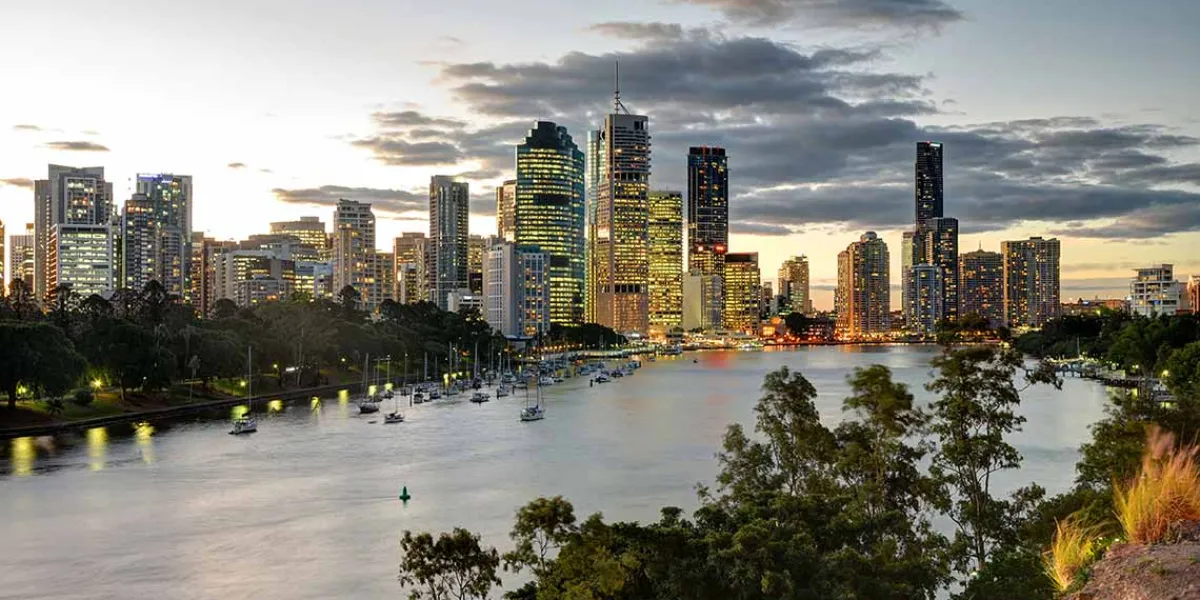
Australia is ideal for a road trip in a campervan from Brisbane, between the Bruce Highway towards the Sunshine Coast and the Pacific Motorway towards the Gold Coast, but driving, parking, and safety adhere to strict rules in Queensland.
Driving and regulations around Brisbane
Starting from downtown Brisbane or Brisbane Airport, driving is on the left on major roads like Coronation Drive, Gympie Road, or the Pacific Motorway, with speed limits generally at 50 km/h in urban areas of South Brisbane and Fortitude Valley and up to 100-110 km/h on the Bruce Highway towards Caboolture and the Sunshine Coast Hinterland.
In Greater Brisbane, including the suburbs of Chermside, Mount Gravatt, and Carindale, campervans rented from agencies like Apollo in Hendra or Britz near Brisbane Airport must comply with Queensland rules on blood alcohol content (0.05 g/L), seatbelt use, and the strict prohibition of using a phone while driving, especially on toll sections like the Clem7 Tunnel and the Gateway Motorway that bypass the Brisbane River.
Sleeping and connecting with a van around Brisbane
In central neighborhoods close to Brisbane City Botanic Gardens, Queen Street Mall, and South Bank Parklands, it is prohibited to sleep in your vehicle in public parking lots, and rangers from the Brisbane City Council regularly monitor areas around Kangaroo Point Cliffs and Roma Street Parkland.
To spend the night in a campervan, it is preferable to aim for campgrounds equipped with electrical hookups around Brisbane Holiday Village in Eight Mile Plains, Newmarket Gardens Caravan Park near Kelvin Grove, or rest areas along the Bruce Highway between North Lakes and Beerburrum, rather than attempting wild camping around the Brisbane River or in the residential streets of Redcliffe or Wynnum.
Parking and nighttime regulations in the Brisbane region
In Brisbane's CBD and the neighborhoods of West End and Fortitude Valley, parking signage is strict, with “Clearway” signs and yellow markings along Adelaide Street, Ann Street, or Boundary Street, where a campervan cannot park or stay overnight without risking a fine issued by the Brisbane City Council.
Around Moreton Bay, in Sandgate, Shorncliffe, or Manly, many waterfront parking lots display “No Overnight Parking” or “No Camping,” particularly near Shorncliffe Pier and Manly Marina, forcing van travelers to join authorized caravan parks like those in Brighton or Cleveland rather than sleeping facing Moreton Bay.
Local tips for exploring from Brisbane
From Brisbane, many van travelers take the Cunningham Highway towards Ipswich and Warwick, or the M1 towards the Gold Coast and Surfers Paradise, but it is recommended to leave downtown before peak hours around Milton, Toowong, and Indooroopilly, where dense traffic on Coronation Drive and the Inner City Bypass complicates driving large vehicles.
To access nearby national parks like D'Aguilar National Park via The Gap, Tamborine National Park from Logan, or Springbrook National Park south of Nerang, anticipate winding and sometimes narrow roads, and avoid driving to the top of Mount Coot-tha Lookout with a large campervan when the scenic parking areas above Toowong are already full at sunset.
Safety and environment in the Brisbane region
The subtropical climate of Brisbane, particularly around suburbs like Indooroopilly, St Lucia, and New Farm along the Brisbane River, requires proper ventilation of the van at night, avoiding leaving devices plugged in continuously during the summer heat, and monitoring storm and flood alerts often issued for low-lying areas of Rocklea or Jindalee.
When leaving Brisbane towards the Glass House Mountains, Toowoomba, or the Scenic Rim near Beaudesert, remain vigilant for local wildlife, especially kangaroos at dawn on the Warrego Highway and animals near the Eucalypt forests in Samford Valley, and never leave food outside at campsites near North Stradbroke Island from the Cleveland ferry terminal.