
This route takes you across fjords that cars bypass: here, the ferry is part of the road. After reading this, you'll understand why certain days are planned to the ferry schedule and which mountain passes to avoid depending on your vehicle's size.
Before You Go: Ferries, Vehicle Size and Roads to Avoid
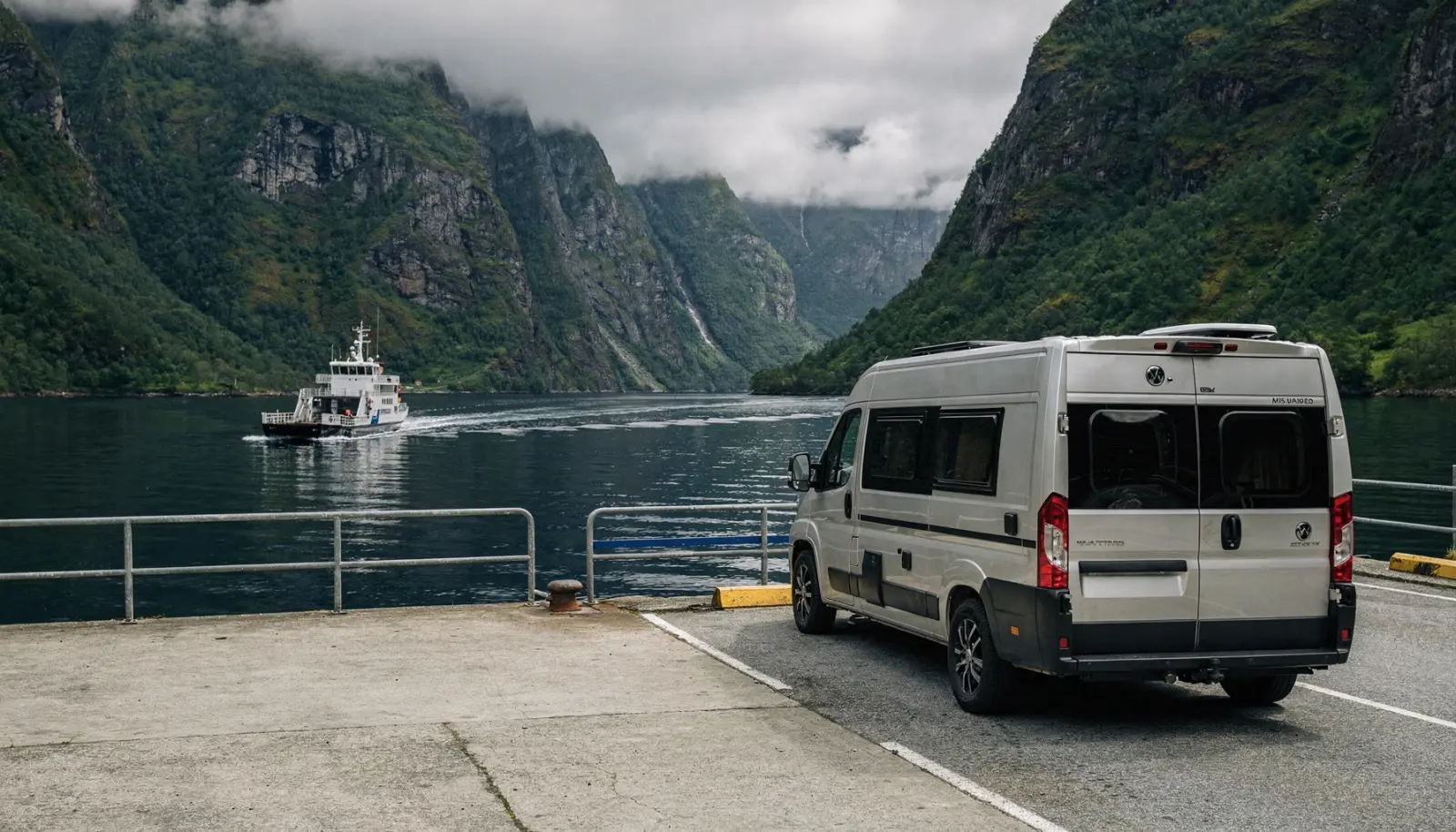
A standard car itinerary doesn't translate well to a campervan in western Norway. The reason comes down to one thing: ferries. They're not a scenic option on this route—they're the backbone that structures your days and sets the pace, often slower than you'd imagine when planning on a map.
Fjord1 and Norled operate most of the region's crossings. The Fjord1 and AutoPASS Ferje apps let you book ahead and pay more easily—a habit worth forming, especially with a longer vehicle. In high season, the Geiranger–Hellesylt crossing fills up quickly for larger vehicles, and Fjord1 strongly recommends booking in advance. Arriving without a reservation at peak time risks losing half a day waiting for the next available slot, or rewriting your entire itinerary on a napkin.
Your campervan's size also determines which mountain roads are viable, and not just in theory. Trollstigen, with its extremely tight hairpins, bans vehicles over 13 m long—worth checking before you build it into your route rather than discovering it at the first switchback. Above Geiranger, the Ørnevegen (Eagle Road) poses a different challenge: it's not forbidden, but it's narrow, heavily trafficked in season, and hard to navigate with a long vehicle caught in the flow of tour buses.
The Nomad tip
Before locking in your dates, book your essential ferry crossings first, then build your stages around them—not the other way around. The boat's schedule sets your departure time, not your desire for a lie-in.
On the rest of the network, realistic driving speed in Norway averages around 80 km/h on open roads, much less through tunnels or long stretches of switchbacks. Add ferry waits, viewpoints worth stopping for, and a 150 km stage can easily fill an entire day. This circuit is designed on that basis: short drives, time to wait for a ferry without stress, and no road that punishes a longer vehicle.
Where to Sleep: Campsites, Parking Areas and Norwegian Camping Rights
Norway permits wild camping thanks to allemannsretten, the right to move freely and stay in nature. For a campervan, that right has real limits: you must keep a minimum distance from houses and cabins (150 metres is generally accepted), and certain protected zones or national parks ban it outright. The principle was designed for tents and backpacks, not a nine-metre vehicle hunting for level ground near the road.
In high season, equipped campsites are the safer bet anyway. You'll find water, electricity, and crucially, proper grey water disposal—a rare commodity once you leave the cities. Along this route, rely on places like Flåm campsite, Ålesund campsite and Geiranger campsite: three stops where the choice makes itself, simply because the view from your pitch justifies the nightly fee.
Speaking of Geiranger, arrival time matters enormously. The campsite gets swamped from early afternoon in season, and the best spots—those with a direct fjord view—go before 3 pm. Arriving after dinner often means squeezing between two vehicles with a view of someone else's windscreen.
The Nomad tip
Aim for Geiranger early: get there before 2 pm if you want a waterfront pitch rather than a backup spot wedged between two vans. On stakes like this, arrival time counts as much as campsite choice.
To spot sites, parking areas and campsites along the way, Park4Night is the most reliable tool, fed by reports from other motorhomers. It comes free with the Mobility Pack, and it's a genuine time-saver on this route: rather than driving blind and hoping to find a space at dusk, you scout ahead for spots that fit your vehicle, which saves improvised manoeuvres on a mountain road after dark.
Budget: Ferries, Tolls and Fuel
On this circuit, one cost doesn't exist at all in an equivalent car route that bypasses the fjords: ferries. Expect around €30 to €60 per crossing for a campervan over 6 m, depending on distance. Over 12 days, stack several mandatory passages and the ferry budget quickly climbs to €150 to €250—a wide range, depending mainly on how many crossings you choose to include and your vehicle's length. This item, more than fuel or tolls, is what truly sets this route apart from a standard western Norway circuit.
Add the AutoPASS system, which covers certain stretches and tunnels in the region. No barrier or ticket booth: a camera reads your number plate as you pass, and the bill arrives by post to the vehicle owner—for a rental campervan, that's the rental company initially, then passed to you. Don't look for a toll window to pay on the spot—there isn't one, and that's exactly what surprises travellers used to southern European tolls.
Fuel, finally, costs the Norwegian price, notably higher than France or Spain: expect €1.90 to €2.20/litre depending on the station and market swings. On a campervan that burns more than a car, across stages peppered with climbing hairpins, that gap stings on the final bill.
The Nomad tip
Don't try to save money by skipping ferries: on this route, they replace hours of mountain driving, not the other way around. A land detour usually costs more in time and fuel than a €40 or €50 crossing.
Overall, budget these three items—ferries, AutoPASS tolls and fuel—as a separate line from accommodation and food. It's this circuit's budgeting quirk: a fjords itinerary costs a bit more than a standard tour, but that's precisely what makes it impossible to replicate elsewhere in Europe.
Campervans — Norway (Oslo)
Sampled Sep 2026| Category | From | Average price | Offers | Companies |
|---|---|---|---|---|
| Campervan2 berths | 148 €/day | 268 € /day | 6 | 4 |
| Motorhome2-6 berths | 266 €/day | 358 € /day | 15 | 3 |
Best starting prices
Nordic Campers148 €/day in a campervan
McRent257 €/day in a campervan
Motorhome Norway265 €/day in a campervan
4 rental companies compared:
Anywhere Campers
McRent
Motorhome Norway
…
+ 1 more
Prices sampled in September 2026 on 21 offers from 4 rental companies, for a 14-day rental starting in July 2027 (high season). Prices include taxes, in euros, excluding fees payable on site.
Every offer sampled includes unlimited mileage.
Indicative conversion at the Banque de France rate of —.
Prices vary with availability and booking date.
See today's prices →
Frequently Asked Questions
Do I need to book ferries in advance on this route?
Yes, especially in July. The Fjord1 and AutoPASS Ferje apps let you book ahead, which makes all the difference with a longer vehicle. On the Geiranger–Hellesylt crossing in particular, spaces for larger vehicles can show sold out several days before departure in high season, so check availability regularly. Booking isn't overkill—it's what stops you losing half a day waiting for the next boat or rewriting your route mid-trip.
Is Trollstigen open to all campervans?
No. Trollstigen bans vehicles over 12.4 m long, including caravans and towed vehicles, because of its extremely tight hairpins. Don't discover this at the first switchback—measure your vehicle before adding this road to your route, and plan an alternative if your campervan exceeds that length.
Can I wild camp anywhere thanks to Norwegian camping rights?
Not really, not with a campervan. Allemannsretten permits wild camping, but it requires a minimum distance from houses and cabins, typically accepted as 150 metres, and certain protected zones or national parks ban it completely. The right was mainly designed for tents, not several-metre vehicles seeking level ground near a road. In high season, sticking to equipped campsites is the simplest solution, if only for grey water disposal.
How much should I budget for ferries over 12 days?
Expect around €30 to €60 per crossing for a campervan over 6 m, depending on distance, though some crossings can exceed €100. Across the full circuit with several mandatory passages, ferry budgets typically run €150–250. It's a wide range, depending mainly on how many crossings you include, your vehicle's length and passenger count—but it's a line item to budget separately from fuel or standard tolls.
The route, leg by leg
LEG 1
Bergen → Flåm
170 km · 3 hr 30The road leaves Bergen along the Sognefjord, Norway's largest fjord, with views of cliff faces plunging into the water. The Lavik–Oppedal ferry punctuates the day: it's worth checking rotation schedules before you go. Overnight in Flåm, at the head of the Aurlandsfjord.
LEG 2
Flåm → Ålesund
300 km · 6 hrThe coastal road to Ålesund chains several short ferry crossings, each one a welcome forced pause. The fishing villages dotted along the route are worth stopping in, if only for a coffee facing the moored boats. This is the longest stretch of the circuit—better spread it over several days than try to cover it in one go.
LEG 3
Ålesund → Geiranger
100 km · 2 hr 30The climb via Ørnevegen, the Eagle's Road, winds its way up to a viewpoint overlooking Geirangerfjord. You then descend toward the village, squeezed between cliff walls and water. Arrive before afternoon to claim a spot facing the fjord rather than set back from it.
LEG 4
Geiranger → Bergen
180 km · 4 hrThe Trollstigen, with its tight hairpins and narrow tunnel, is closed to vehicles over a certain length: check the authorised dimensions before attempting it. An alternative route by standard road allows you to close the loop back to Bergen. This final stage loops back with ferries included, at a faster pace than the outbound journey.


