
 eng
eng


First rental of this type of vehicle in a professional context where the rental must take place from France to Canada. Many questions and Cooldrive (Marlène) has been a valuable support in guiding my choices. Efficiency and responsiveness beforehand, and on-site a vehicle and service that met our expectations. No complaints. Great!
Over 50 000
rentals since 2011 !
rentals since 2011 !
Japan, a land of ancient traditions and fascinating modernity, is an ideal destination for an unforgettable adventure. Opting for campervan rental in Japan allows you to discover at your own pace the varied landscapes, vibrant cities like Tokyo, with its impressive skyscrapers, or Kyoto, where historic temples coexist with soothing Zen gardens. Traveling by campervan offers the freedom to stop wherever your heart desires, whether to admire cherry blossoms or explore less frequented regions. Prepare to experience a unique adventure, combining the natural beauty and cultural richness of this captivating country.
Exploring Japan by campervan offers a unique freedom to discover its varied landscapes, dynamic cities, and cultural treasures at your own pace. Here are three iconic itineraries suited to different durations, blending nature, heritage, and local immersion, perfect for an unforgettable road trip in the Land of the Rising Sun.
Itinerary 7-10 days: Tokyo, Mount Fuji, and the Japanese Alps
Start your adventure in Tokyo, a vibrant capital where modernity and tradition coexist. After a few days exploring its iconic neighborhoods, hit the road to Mount Fuji via Lake Kawaguchi to admire this symbol of Japan. Then, continue to the Japanese Alps with a stop in Takayama, known as “Little Kyoto,” and then to the village of Shirakawa-go, famous for its thatched-roof houses listed as UNESCO World Heritage. This route offers a perfect balance between urbanism, nature, and heritage, ideal for a first discovery by campervan.
Itinerary 14 days: From Tokyo to Kyoto via Kanazawa and Nara
This two-week circuit takes you through Japan's must-see spots. After Tokyo, head to Kanazawa to visit its traditional gardens and historic neighborhoods. Then explore Shirakawa-go before heading to Takayama, and then make your way to Kyoto, the cultural heart of the country, where you can admire temples, shrines, and ancient alleys. An excursion to Nara, with its free-roaming deer and majestic temples, completes this journey. The campervan allows you to adjust your stops and fully enjoy the landscapes between each urban stop.
Itinerary 21 days: Grand Tour of Japan between Cities, Mountains, and Sea
For a three-week trip, start from Tokyo and explore the Nikko and Hakone region, with their onsen and views of Mount Fuji. Continue to Kyoto and Osaka for a deep cultural immersion, then head towards Hiroshima and the sacred island of Miyajima. Proceed into the Japanese Alps with Takayama and Shirakawa-go, before discovering the Kii Peninsula, its sacred mountains, and hot springs. This long campervan road trip offers exceptional diversity, combining major urban centers, preserved nature, and historical heritage.
All the towns where you can rent a motorhome in Japan
Discover on this map all the cities in Japan where you can rent your motorhome or campervan.
Use the search engine to find out exactly which departure and return towns you can use to organise your road trip.
To do this, enter the first letters of the country in the corresponding field and discover all the cities in Japan or elsewhere.
Loading the interactive map...
Traveling by Campervan in Japan: When to Go and How to Enjoy the Seasons
Japan offers remarkable climatic diversity depending on the regions and seasons, making each travel period unique for exploring the country by van. Understanding weather variations and seasonal rates is essential for planning a memorable road trip across the Japanese islands.
Spring: The Ideal Season to Start Your Adventure
Spring, from March to May, is the most popular time to visit Japan by campervan. Mild temperatures range from 10 to 20°C, providing pleasant and safe driving conditions. It is especially the cherry blossom season that attracts travelers: in Tokyo, you can admire this natural spectacle in April, while northern regions like Hokkaido reach their peak in May. Days are sunny with little rain, ideal for exploring coastal roads and mountains without fear of bad weather.
Summer: Vibrant Festivals Despite the Intense Heat
From June to August, the Japanese summer is characterized by stifling heat and extreme humidity, with temperatures reaching 25 to 35°C, and even higher in major cities like Tokyo where they can exceed 31°C. The rainy season, called tsuyu, extends from early June to mid-July, making the first three weeks of July particularly rainy. However, summer offers a unique experience with street festivals enlivening the entire country and fireworks illuminating the rivers. The mountains of Hokkaido in the north provide a welcome refuge with a more bearable climate and less rain.
Starting in August, the typhoon season begins and can disrupt your travel plans, especially in southern regions like Kyushu, Shikoku, and Okinawa where the risk is higher. If you are traveling by van during this period, plan flexible itineraries and stay alert to weather alerts.
Autumn: Comfortable Climate and Spectacular Landscapes
Autumn, from September to November, is the second best season for a road trip by campervan in Japan. Temperatures range from 7 to 27°C, offering a pleasant and stable climate. Precipitation gradually decreases, although September and October remain slightly humid. This season allows for exploring mountain roads without the stifling heat of summer, and the landscapes are adorned with spectacular autumn colors. Accommodation and rental rates begin to decrease after the summer high season.
Winter: Powder and Sunny Coastal Roads
From December to March, the Japanese winter offers remarkable contrasts depending on the regions. In Tokyo and along the Pacific coasts, the weather remains dry and sunny with temperatures between 1 and 10°C, ideal for exploring by van without snow. In contrast, the western side of Honshu, particularly around Niigata, can be buried under several meters of snow, while northern regions like Hokkaido are covered in exceptional powder, marking the start of the ski season. Accommodation and campervan rental rates are at their lowest, providing an excellent economic opportunity for flexible travelers.
Regional Variations and Planning Your Itinerary
The climate in Japan varies considerably depending on latitude and altitude. Okinawa in the far south enjoys a subtropical climate with mild temperatures year-round, while Hokkaido in the north experiences harsh winters. The Ogasawara Islands, located even further south, offer a consistently warm climate with average temperatures of 30°C in August and 22°C in February, although strong winds between January and March require proper preparation. When planning your van road trip, consider these regional variations to tailor your itinerary and equipment to the specific seasonal conditions of each destination.
All vehicles for rent in Japan
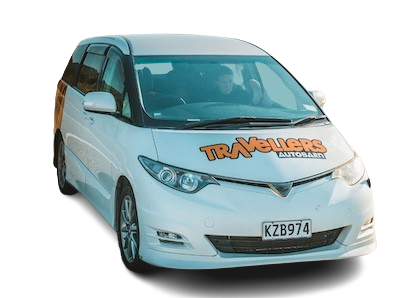
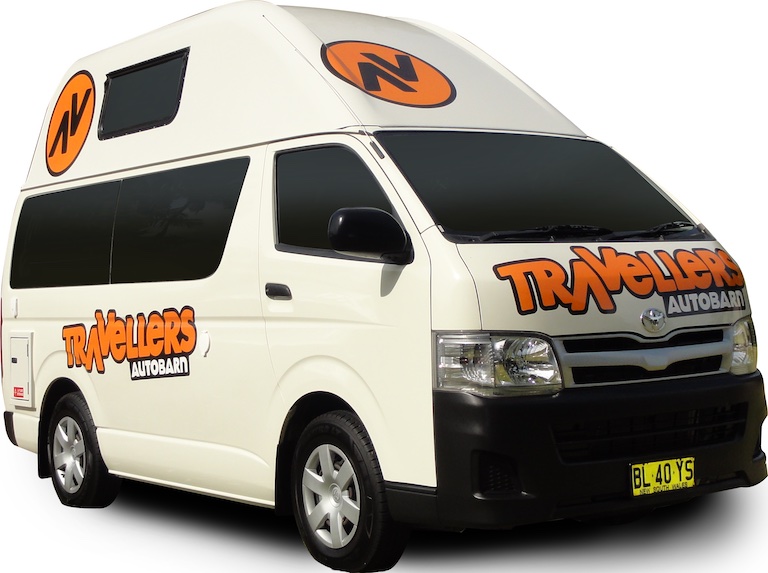
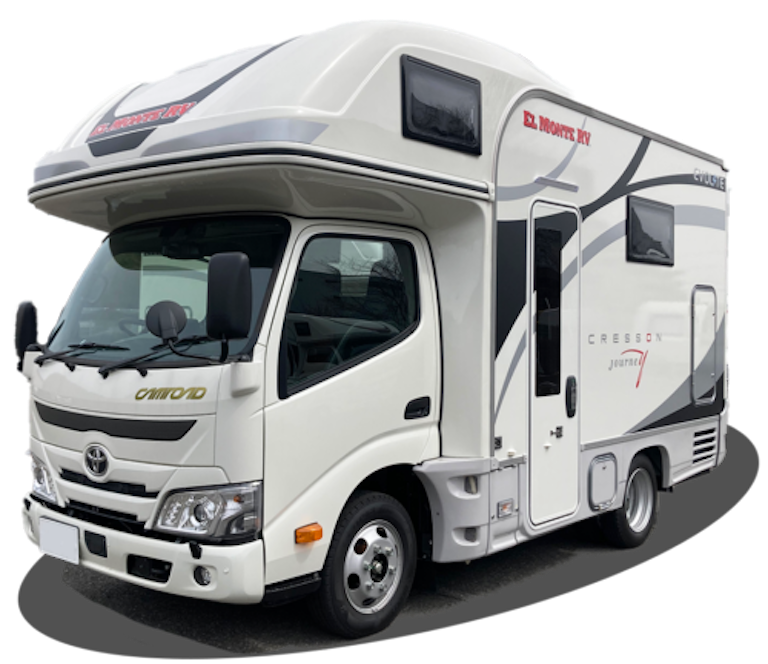
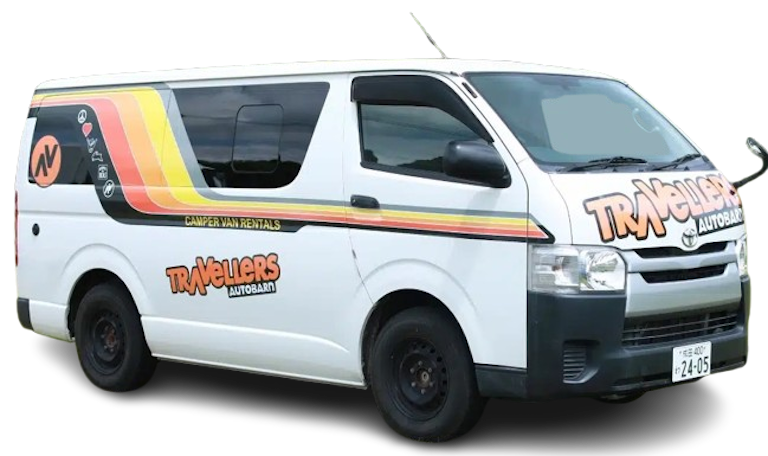
This list gives you a good overview of the offer of motorhomes, campervans, and other vehicles in Japan. Please note that not all of these vehicles are necessarily available at all rental agencies of our partners. To find out about the available vehicle options for your road trip, please use the search form at the top of this page. You can then filter the results by rental company, price, type of motorhomes, compare rental offers and their options, check availability, save your offers, and of course book online when your choice is made!
Practical Tips for Traveling by Campervan or Van in Japan
Japan offers a unique experience for travelers in campervans or vans, with varied landscapes, remarkable safety, and adapted infrastructure, but certain specific rules must be respected at each stage of the journey.
Driving and Regulations
In Japan, driving is on the left, and the turn signal is located on the right side of the steering wheel. Speed limits are strict: 30 to 50 km/h in cities, 60 km/h in suburbs, and 120 km/h on highways. The legal blood alcohol limit is very low, and any excess can lead to criminal prosecution. To drive, you must have an official translation of your driver's license issued by the Japan Automobile Federation (JAF), as international licenses of the Vienna type are not accepted.
Sleeping and Hooking Up
Sleeping in your campervan or van is legal in Japan, particularly in michi-no-eki, these rest areas spread throughout the country, which allow free parking. Wild camping is strictly prohibited, including in national parks like Fuji-Hakone-Izu National Park. For showering, onsen and sento, public baths available in every city and village, offer a practical and affordable solution.
Local Tips & Safety
Japan is an extremely safe country, even for sleeping in the countryside. It is advisable to be discreet and to respect the “leave no trace” rule: do not leave any waste behind. Avoid cooking on a stove in natural places, as this may be frowned upon by locals. Campgrounds and michi-no-eki are the best places to spend the night in peace.
Frequently Asked Questions in Japan
What driver's license do I need to rent a campervan in Japan?
To rent a campervan in Japan, you must have a valid driver's license from your home country as well as an international driver's permit (IDP). Remember that driving is on the left in Japan. Rental agencies can assist you in obtaining the IDP, simplifying administrative procedures before your departure.
How much does it cost to rent a campervan in Japan?
Rates vary depending on the season and the type of vehicle. In spring, expect to pay around 50 to 68 euros per day for a small converted van. Larger campervans often exceed 100 euros per day.
Where can I sleep with my campervan in Japan?
Several options are available: Michi no Eki (road stations) offer free and legal parking for the night with toilets. Certified RV Parks provide equipped sites with electricity and sanitary facilities. Traditional campgrounds and public parking outside major cities are also free. Wild camping is strictly prohibited in Japan.
What exactly are Michi no Eki?
Michi no Eki are Japanese road stations accessible 24/7 where campervanning is tolerated for free. They have toilets, running water, and local tourist information. With over 1,230 stations spread across the country, they are an ideal economical solution for van travelers. You can locate them via the official website or Google Maps.
How to find parking spots for the night?
Public parking is generally free outside major cities. In the countryside and mountains, you will find roadside parking spots. The Park4Night app (premium version available) helps you locate the best spots. Always respect the “leave no trace” rule: be discreet and leave no waste behind.
Where to take a shower in a van in Japan?
Japanese campervans, especially smaller models, generally do not have showers. Fortunately, Japan has onsen (natural hot springs) and sento (public baths) in every city and village. For a small fee, you can easily relax and wash. Check the usage rules before your visit.
Is Japan safe for traveling by campervan?
Yes, Japan is an extremely safe country. Security issues are very rare, especially if you sleep in the countryside. The Japanese police are very professional and well-organized. You can travel with confidence by respecting local rules and parking in authorized areas.
They traveled in Japan
Discover the latest verified customer reviews translated into your language and published on Trustpilot and Verified Reviews platforms.

Too rigid computer system
Very good customer experience with Cooldrive. I highly recommend it! Thanks to the team who were attentive and available for organizing my trip to Canada.

Great experience with Cooldrive. I highly recommend it 100%. Reliable, attentive, available, responsive. Thanks to Marléne for her support.
Initially, the camper offered online was not available, but a good alternative was quickly provided. The communication regarding the various steps to be taken is clear. The camper was from 2025 and was clean and complete. The pick-up in Norway took longer than expected (4 hours), but in the end, it became a vacation to never forget. Highly recommended!
No unpleasant surprises
Cooldrive recommended that I take out insurance, which turned out to be unable to handle an issue that arose during the stay.
Top rates and service
Impeccable
Quick and efficient response
Everything was quick and quite simple. Just a small downside upon arrival, we waited a good amount of time before being taken care of.
Perfect
Interesting price, clear file and follow-up. Very easy to get answers to our questions, very pleasant staff.
We rented a campervan for a trip to Iceland. Everything went well. Good service from Cooldrive.
Great vacation in the Baltic States. When everything goes well, it is easy to speak highly of the people who helped you. But beyond the quality of the vehicle and the welcome from the rental company, it is also important to note the support received from Cooldrive, which responded quickly to all our requests. This provides a sense of security that allows you to truly relax, knowing that in case of...
great experience! The CoolDrive agents are very helpful with all the procedures
Incorrect information about the rental dates resulting in a charge for an additional day despite my inquiries to Cool Drive right after my booking. Refusal to modify my reservation because it did not lead to a change in price. Incorrect information confirmed by the rental company that was expecting a response the next day...
The whole booking, communication, and actual rental experience has been smooth, effective, and enjoyable. Not sure how that could have been any better, at least in our experience, other than perhaps a final communication just before the start of the rental (but really, we had all info and details already). Collection and return of the motorhome was smooth and friendly staff (from iCaravan). All in...
Very good from the quote to the rental, I recommend!
Good and quick communication, easy to book and easy to follow all the instructions.
Easy to contact intermediary. For my part, a big thank you to Marlene for her availability and responsiveness.
Excellent service, speed, and courtesy
Easy communication, in French
They have always responded quickly to all my requests and their website is very functional!
Everything was well arranged, clear information in advance, and the handover of the mobile home went smoothly.
It is convenient to book a vehicle without too many questions. However, personally, I went to Iceland, and the story surrounding the insurance was really not clear with the rental agency.
Diversity of offerings, clear presentation of the site, available options. No surprises on the price; you know what you're paying for. I recommend it and will probably use it again for other camper van trips.
Responsiveness to emails and requests is excellent.
Everything went well.
Hello, very bad experience with the rental made with Causeway Campers Ltd: the rented camper was damaged from a previous accident with many parts taped up, including the rear bumper, which came loose during the jolts in the middle of the trip that I had to reattach after notifying them with makeshift means, causing stress on the road in the second part of the trip (photo available if needed); upon...
Motorhome and campervan rental companies in Japan
Below you’ll find all the motorhome and campervan rental companies we work with in Japan.
These are exclusively professional rental companies in Japan, renowned for the quality, reliability and maintenance of their fleet of vehicles.
Renting a motorhome with CoolDrive from one of these companies gives you the guarantees and insurance you need to make sure your trip goes smoothly in Japan.
Click on the logo to access the rental company’s details.



Special offers on motorhome rentals in Japan
Here are the promotional offers currently available for each motorhome and campervan rental company in Japan.
The conditions for applying these discounts are managed individually for each rental offer and depend mainly on the dates of your trip in Japan.
To find out exactly what promotions are available in Japan, the easiest way is to carry out a search and look at the offers on offer.
You can then save these offers in your customer area or make your booking request directly.
Most promotions are limited in time, so make the most of them before they’re gone!
Why choose CoolDrive Nomad?
A team of enthusiasts and professionals to serve and advise you
And simply the best platform for booking motorhomes and campervans around the world!
Tips
A company created in 2011 with thousand rentals track record with a dedicated experts team to make your camper customer experience a successful trip
Lowest Price guaranteed
Compare with our hundreds of partner rental companies and a few challengers, then come back to us!
Complete offer
Certainly the most comprehensive and diverse offer for motorhome and campervan rentals around the world
Customer satisfaction
Insurance, guarantees, customer satisfaction, what to ask for more for your motorhome rental abroad
Cancellation Insurance
Book your motorhome rental without stress, with the guarantee that you will be reimbursed according to the insurance conditions
Baggage insurance
Receive compensation for the replacement of your belongings in case of loss, theft, or damage to your baggage
Serenity+ Pack free*
Find out more
Stay connected
An eSIM with several GB to stay connected and surf the web, even on the other side of the world
Park4Night+
Premium version of the app offered for 1 year to easily find a spot to park overnight
Free Mobility Pack
Find out more